
Heating Oil vs. Natural Gas vs. Heat Pump: Which Fuel Is Cheapest in New England?
New England winters are notorious for freezing temperatures and unforgiving heating bills. Whether you live in a historic brownstone in Suffolk County or a cozy single-family home in Rockingham County, keeping your home warm without breaking the bank is a top priority. Homeowners across Massachusetts and New Hampshire routinely ask: Which heating fuel is actually the cheapest?
The answer depends on several factors, including local utility rates, system efficiency, incentives, and home insulation. At New Era HVAC Services, we help homeowners across our service areas in Essex County, Middlesex County, Suffolk County, Worcester County, Hillsborough County, and Rockingham County evaluate their options to find the most cost-effective heating solutions. In this guide, we break down heating oil, natural gas, and modern heat pumps so you can make an informed decision for your home.

Heating Oil, Natural Gas, or Heat Pumps: Unveiling New England's Most Cost-Effective Heating Option
In New England, fluctuating energy costs and evolving technology make choosing the right heating solution crucial for homeowners. Based on extensive research and data analysis, natural gas often emerges as the most economical option, particularly when considering long-term price trends and efficiency ratings. However, heat pumps are gaining traction due to their energy efficiency and lower environmental impact, making them a viable alternative for those seeking sustainability. Understanding these dynamics is essential for homeowners to make informed decisions that align with their budgets and values.
1. Heating Oil: High Availability, Volatile Prices
Heating oil remains common across suburban and rural New England, especially where municipal natural gas lines do not reach. However, heating oil prices fluctuate wildly based on global crude oil markets and regional supply constraints (U.S. Energy Information Administration [EIA], 2025).
PROS
- Burns at high temperatures, producing rapid and intense room heat during sub-zero cold snaps.
- Does not require proximity to a natural gas main.
CONS
High delivery costs and volatile price per gallon.
Requires on-site storage tanks that need monitoring and periodic maintenance.
Lower seasonal efficiency (typically 80%–87% AFUE) compared to modern alternatives.
If your current oil system is aging or struggling to heat evenly, scheduling timely boiler repair in Worcester or furnace repair in Lowell can restore efficiency while you evaluate long-term fuel upgrades.
2. Natural Gas: Reliable and Cost-Effective

Natural gas is generally one of the cheapest traditional heating fuels in New England on a per-BTU delivered basis (American Gas Association, 2026). High-efficiency condensing furnaces and boilers convert up to 95%–98% of gas into usable heat (Massachusetts Department of Energy Resources [DOER], 2025).
Pros:
- Delivered via underground utility pipelines—no fuel tanks or delivery scheduling required.
- Lower average operating costs than heating oil in urban centers like Boston.
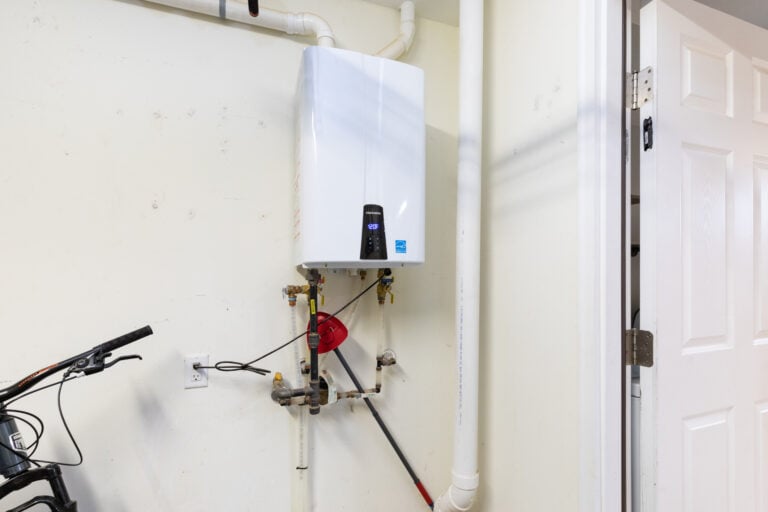
- Versatile fuel source that can also power tankless water heaters and gas ranges.
Cons:
- Infrastructure limits: Not all neighborhood streets have existing gas mains.
- Hookup fees and gas line installation expenses can add upfront costs.
3. Heat Pumps: High Efficiency & All-in-One Comfort

Modern cold-climate heat pumps have transformed New England home heating. Unlike combustion systems that generate heat, heat pumps transfer thermal energy from outdoor air into your home. Even in freezing conditions, air-source heat pumps achieve Coefficients of Performance (COP) between 2.0 and 3.5, meaning they deliver 2 to 3.5 times more heat energy than the electricity they consume (U.S. Department of Energy [DOE], 2024).
Pros:
- Unmatched Efficiency: Operational efficiency routinely exceeds 200%–300% compared to traditional systems when you upgrade to modern heat pump installation.
- Year-Round Comfort: Provides both heating in winter and efficient central air conditioning in summer.
- Substantial Rebates: Programs like Mass Save offer up to $10,000 in whole-home heat pump rebates (explore our latest promotions and savings), alongside federal Inflation Reduction Act tax credits.
Cons:
- New England electricity rates are higher than the national average, making proper system sizing by qualified HVAC specialists critical (EIA, 2026).
- Requires expert heat pump installation to ensure heat output remains reliable during deep freezes.<
Whether you need a full central system or a flexible ductless mini split in Pelham, professional heat pump installation in Boston maximizes energy rebates and slashes annual utility costs.
FAQs
What are the main differences in costs between heating oil, natural gas, and heat pumps in New England?
+
The costs can vary significantly based on market prices and efficiency. Generally, natural gas tends to be the cheapest option for heating, followed by heat pumps, while heating oil usually ends up being the most expensive. However, local factors such as supply and demand, efficiency of your heating system, and installation costs also play crucial roles.
How can I determine which heating option is the most affordable for my home?
+
To find the most affordable heating option for your home, consider your current heating system's efficiency, fuel prices in your area, and the installation costs for different systems. Conducting an energy audit can also help you evaluate your home's specific heating needs and costs.
Is switching from heating oil to a heat pump worth the investment?
+
Switching from heating oil to a heat pump can be worth it if you’re looking for long-term savings and a more environmentally friendly option. Heat pumps are generally more efficient and can lower your heating costs over time, but initial installation can be higher. It's essential to evaluate your home’s insulation and local climate to gauge the potential savings.
When is the best time to switch from natural gas to heating oil for cost savings?
+
The best time to switch from natural gas to heating oil for cost savings typically depends on fluctuating fuel prices. Keeping an eye on market trends during the fall or spring may help you lock in lower prices. Additionally, consider your heating demand during peak winter months, as that can also influence your decision.
Why might someone choose heating oil over natural gas or heat pumps despite higher costs?
+
Some people might choose heating oil over natural gas or heat pumps due to factors such as energy independence, availability, or preference for the performance of oil heating in very cold conditions. Additionally, existing infrastructure may play a role in their decision, especially if they've invested in an oil heating system already.
How much can I expect to pay annually for heating with natural gas compared to heating oil and heat pumps?
+
Annual heating costs can vary widely based on usage and fuel prices, but on average, homeowners using natural gas might spend around $1,000 to $1,500, while those using heating oil could pay between $1,500 and $2,500. Homes with heat pumps might see costs in the range of $600 to $1,200 depending on efficiency and electricity rates, making them a potentially cheaper option in the long run.

Fuel Cost Comparison Summary
The table below summarizes average operational performance across New England residential heating sources:
| Heating Fuel / System | Typical Efficiency | Average Operating Cost Level | Best Suited For |
|---|---|---|---|
| Heating Oil | 80% – 87% AFUE | High / Volatile | Rural homes without gas lines or ductwork |
| Natural Gas | 90% – 98% AFUE | Low to Moderate | Homes connected to municipal gas grids |
| Cold-Climate Heat Pump | 200% – 350% (COP 2.0–3.5) | Lowest (when paired with rebates) | Homes seeking all-in-one heating, cooling & high efficiency |
4. Mass Save® & NHSaves: Maximizing Rebates & Financing
Upfront equipment costs can be a major factor when switching from heating oil or an aging furnace to a cold-climate heat pump. Fortunately, New England offers some of the most generous energy incentives in the country.
Mass Save® Rebates (MA): Massachusetts homeowners can qualify for up to $10,000 in whole-home heat pump rebates, plus 0% APR financing for up to 7 years through the HEAT Loan program. Explore current savings on our HVAC promotions page or verify eligibility directly at Mass Save Heat Pump Incentives.
NHSaves Incentives (NH): Southern New Hampshire residents in Rockingham and Hillsborough Counties can access instant utility rebates for high-efficiency electric systems via NHSaves Rebates & Incentives.
Federal IRA Tax Credits: Under Section 25C of the Inflation Reduction Act, homeowners nationwide can claim a 30% federal tax credit (up to $2,000) on qualifying heat pump upgrades. Details are available on the IRS Energy Efficient Home Improvement Credit guide.
To help bridge the gap between initial investment and long-term utility savings, New Era HVAC Services also offers flexible payment options through our HVAC financing solutions.

5. Dual-Fuel Systems & Smart Thermostat Optimization
If you are hesitant to completely disconnect from your natural gas or oil setup, a hybrid dual-fuel system offers a high-efficiency alternative. Dual-fuel systems pair an electric heat pump with an auxiliary gas or oil backup system.
On mild winter days when temperatures remain above 30°F–35°F, the electric heat pump handles 100% of heating demands at peak efficiency. During extreme freezes below 20°F, the system automatically shifts to your gas furnace or boiler for maximum thermal output.
Integrating dual-fuel equipment with modern smart thermostat installation enables automated temperature thresholds based on outdoor weather and real-time utility rates. Use our interactive HVAC savings calculator to model your potential annual fuel reduction.
6. Year-Round Efficiency: Whole-Home Cooling & Water Heating
Evaluating fuel choices isn’t limited to winter space heating—it impacts total annual utility expense. Upgrading your heating system creates opportunities for secondary efficiency gains across your home.
Integrated Summer Cooling: Heat pumps double as high-efficiency summer air conditioners, replacing aging window units or legacy central AC. Learn more about our complete cooling services and AC installation options.
Water Heating Upgrades: Water heating accounts for nearly 18% of average home utility spending. Transitioning to a high-efficiency tankless water heater or heat pump water heater further reduces overall gas and oil reliance. Explore our water heater replacement solutions.
To ensure your new equipment operates at top seasonal efficiency year-round, join our White Glove Club maintenance program for routine tune-ups, filter checks, and priority service response.
Which System Is Right for Your Home?
If you have access to natural gas, a high-efficiency gas furnace or boiler offers stable, affordable heating. If you currently rely on expensive heating oil, transitioning to a cold-climate heat pump—or installing a hybrid dual-fuel system—is often the single smartest financial investment you can make, thanks to state rebates and long-term energy savings.
At New Era HVAC Services, we make upgrading effortless. Take advantage of flexible Financing options, explore our savings programs, or join our White Glove Club for year-round preventive maintenance and priority service.
Ready to lower your heating bills this winter? Call New Era HVAC Services today at (978) 574-7436 or Book Online to schedule an in-home heating consultation with our licensed technicians.
Local Solutions for Massachusetts & New Hampshire Homeowners
Heating needs vary significantly by community. That is why New Era HVAC Services brings localized expertise to every town and city we serve:
Satisfied Communities Gave New Era 5 ★ on Google Reviews!
- Essex County, MA: From annual boiler maintenance in Andover to emergency furnace repair in Salem, and comprehensive installations in Haverhill, Lawrence, Merrimac, and Methuen, we help North Shore residents maintain peak heating performance.
- Middlesex County, MA: We provide reliable heating services in Dracut and Hudson, and furnace maintenance in Lowell to keep systems running smoothly through winter.
- Suffolk & Worcester Counties, MA: Homeowners in urban centers like Boston and Worcester benefit from fast response times for gas line upgrades, heat pump retrofits, and system conversions.
- Rockingham & Hillsborough Counties, NH: In Southern New Hampshire, we specialize in high-efficiency heating upgrades, including heat pump repair in Salem, as well as dependable service throughout Atkinson, Windham, and Pelham.

References
- American Gas Association. (2026). EIA projects rising electricity prices, widening the gap with natural gas to 4.0x in 2027. https://www.aga.org/wp-content/uploads/2026/03/EIA-Projects-Electricity-to-Cost-4x-Natural-Gas-in-2027.pdf
- Massachusetts Department of Energy Resources. (2025). Massachusetts household heating costs. Commonwealth of Massachusetts. https://www.mass.gov/info-details/massachusetts-household-heating-costs
- U.S. Department of Energy. (2024). Heat pump systems. Office of Energy Efficiency & Renewable Energy. https://www.energy.gov/energysaver/heat-pump-systems
- U.S. Energy Information Administration. (2025). Winter fuels outlook. U.S. Department of Energy. https://www.eia.gov/outlooks/steo/special/supplements/2025/winterfuels.pdf
- U.S. Energy Information Administration. (2026). Electricity monthly update: Retail prices by state. U.S. Department of Energy. https://www.eia.gov/electricity/monthly/update/