
If your water heater is nearing the end of its life or you are simply tired of watching your energy bills climb, a heat pump water heater may be one of the smartest upgrades you can make to your home. These systems work differently from traditional electric or gas water heaters, and that difference translates to significant long-term savings for homeowners who make the switch. They are not right for every situation, but for many Massachusetts households, the numbers make a compelling case. In this guide, we cover everything you need to know, including how water heater installation and replacement works and what the process looks like. Here is what we will walk through:
- How a heat pump water heater works and what sets it apart
- The key benefits for homeowners and why the numbers make sense
- What you can expect to pay upfront and over time
- How it compares to other water heater types
- Common questions homeowners ask before making the switch
How a Heat Pump Water Heater Works
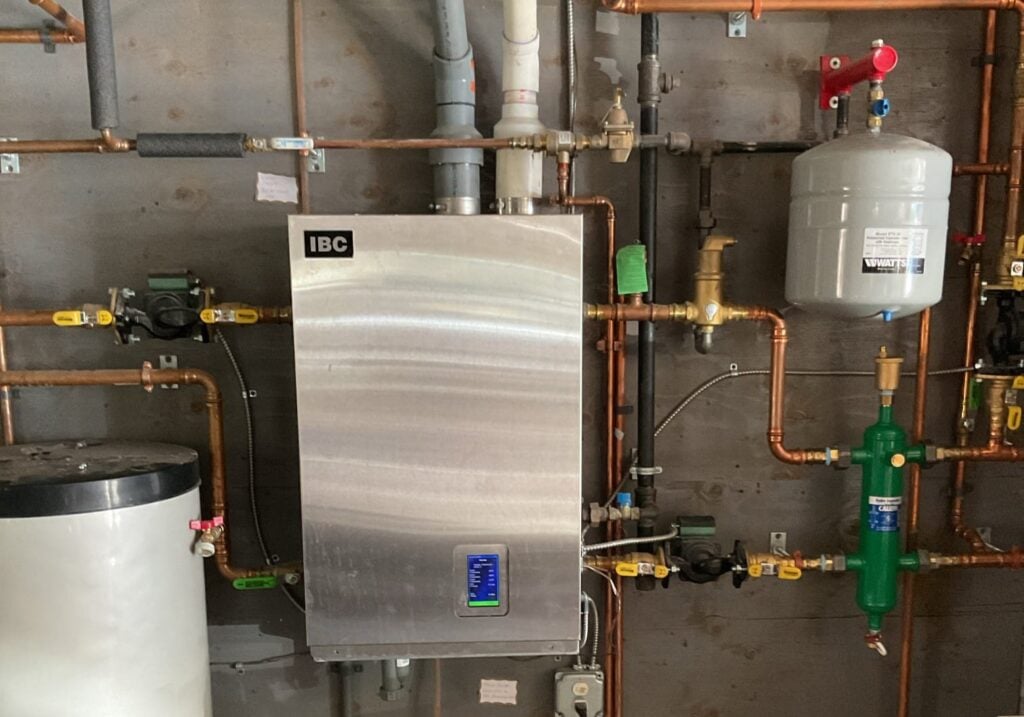
Unlike a traditional electric water heater that generates heat directly using electrical resistance elements, a heat pump water heater moves heat rather than creates it. It pulls warmth from the surrounding air and transfers that heat into the water stored in the tank. The process works much like a refrigerator in reverse: instead of pulling heat out of a space and expelling it elsewhere, the unit captures heat from the room and uses it to warm your water.
This is why heat pump water heaters are so much more efficient. They are not converting electricity directly into heat on a one-to-one basis. They are using a small amount of electricity to move a much larger amount of existing heat energy, which dramatically reduces the power required to do the same job.
Most models also include backup electric resistance heating elements that kick in during periods of high demand or when ambient temperatures drop too low for the heat pump to operate efficiently. This hybrid design gives homeowners both maximum efficiency under normal conditions and reliable hot water when it is needed most.
Where Does a Heat Pump Water Heater Need to Be Installed?
Location matters more with a heat pump water heater than with a standard tank. Because the unit draws heat from the surrounding air to do its job, the space it lives in directly affects how efficiently it operates. Getting the location right from the start ensures you actually realize the efficiency gains you are paying for.
- Temperature range: The installation space should stay between roughly 40 and 90 degrees Fahrenheit year-round. Unconditioned basements, utility rooms, and garages are typically ideal. Spaces that regularly drop below 40 degrees force the unit to rely on its backup electric resistance elements, which reduces efficiency.
- Air space requirement: The unit needs approximately 1,000 cubic feet of surrounding air space to pull from. Tight closets or very small mechanical rooms do not provide enough volume and are generally not suitable.
- Clearance around the unit: Adequate clearance on all sides is required for proper airflow and service access. Your installer will confirm exact spacing requirements based on the model selected.
- Proximity to living spaces: Heat pump water heaters produce some operational noise similar to a window air conditioner. Installing in a basement or utility room away from bedrooms is preferable.
A licensed plumber or HVAC technician can assess your home and confirm whether your intended location is a good fit before any work begins.
5 Key Benefits of a Heat Pump Water Heater
The case for making the switch comes down to a few core advantages that stack up meaningfully over the life of the unit. Here is what homeowners gain when they make the upgrade.
- Dramatically Lower Operating Costs: This is the benefit that drives most purchasing decisions. According to the U.S. Department of Energy, heat pump water heaters can be two to three times more energy efficient than conventional electric resistance water heaters. For a typical Massachusetts household that relies on electric water heating, that level of efficiency improvement translates to hundreds of dollars in annual savings on utility bills. Over the lifespan of the unit, those savings can easily exceed the difference in upfront cost.
- Strong Federal and State Incentives: Homeowners who purchase and install a qualifying heat pump water heater can currently claim a 30 percent federal tax credit of up to $2,000 per year under the Inflation Reduction Act. Massachusetts also offers additional rebate programs through Mass Save that can significantly reduce the net cost of installation. Combined, these incentives can bring the effective purchase price much closer to that of a conventional electric model, making the long-term math even more favorable.
- Longer Useful Lifespan: Heat pump water heaters are built to last. Most quality units carry warranties of 10 years and have an expected operational lifespan of 10 to 15 years or more with proper maintenance. Traditional tank water heaters typically last 8 to 12 years. The combination of longer lifespan and lower operating costs compounds the financial advantage over time.
- Reduced Carbon Footprint: Because these units use significantly less electricity to produce the same amount of hot water, they reduce a household’s overall energy consumption and associated carbon emissions. For homeowners in Methuen, MA and across Massachusetts who are looking to reduce their environmental impact without sacrificing comfort, this is a meaningful benefit alongside the financial ones.
- Cooling Effect as a Bonus: Since the unit pulls heat out of the surrounding air to heat the water, it effectively cools and dehumidifies the space it is installed in. For basements that tend to run warm or humid during summer months, this side effect can be a genuine perk rather than a drawback.
What Does a Heat Pump Water Heater Cost?
Understanding the full cost picture requires looking at both the upfront investment and the long-term operating expenses together.
| Cost Factor | Heat Pump Water Heater | Traditional Electric Water Heater |
| Unit cost | $800 to $1,500+ | $300 to $700 |
| Installation cost | $300 to $600 | $200 to $500 |
| Federal tax credit (30%) | Up to $2,000 | Not available |
| Mass Save rebate | Up to $750 (varies) | Not available |
| Estimated annual energy cost | $150 to $250 | $400 to $600 |
| Expected lifespan | 10 to 15 years | 8 to 12 years |
After applying available incentives, many homeowners find the effective upfront cost is comparable to a standard electric replacement. The ongoing annual savings then make it the more economical option within just a few years of installation.
We’re proud to serve home and business owners in Methuen, MA, and nearby communities with water heater installation, replacement, and more. Our team can walk you through current incentive eligibility and help you understand your total cost of ownership before making any decisions.
Heat Pump vs. Other Water Heater Types
Not every homeowner is choosing between a heat pump and a traditional electric model. Here is how heat pump water heaters compare across the most common alternatives.
- Traditional electric tank: Uses electric resistance heating, which is significantly less efficient. Higher annual operating costs with no available tax credit. Best suited to situations where a heat pump unit cannot be properly installed.
- Gas tank water heater: Lower upfront cost and familiar technology, but natural gas prices fluctuate and Massachusetts has been pushing toward electrification. No federal tax credit applies to standard gas models.
- Tankless water heater: Heats water on demand without a storage tank, which eliminates standby heat loss. Gas tankless models can be very efficient, but electric tankless models draw high amperage and may require electrical panel upgrades. Heat pump models typically outperform electric tankless on efficiency.
- Solar water heater: Very low operating costs when paired with solar panels, but high upfront installation cost and weather dependence make it less practical for many New England homes.
For most homeowners upgrading from an aging electric tank unit, a heat pump water heater offers the best combination of efficiency, incentive availability, and long-term savings.
Common FAQs About Heat Pump Water Heaters
Homeowners considering this upgrade tend to have a consistent set of questions. Here are the answers to the most common ones.
Will a heat pump water heater work in a Massachusetts winter?
Yes, with some nuance. Heat pump water heaters operate most efficiently when the surrounding air is above 40 degrees Fahrenheit. Units installed in conditioned or semi-conditioned basements typically maintain adequate ambient temperatures year-round even in cold New England climates. When temperatures drop too low, the backup electric resistance elements take over automatically, so you will still have reliable hot water. Efficiency does decrease slightly during those periods, but the annual savings remain significant.
How long does installation take?
A standard installation by a licensed plumber typically takes two to four hours. If your home requires electrical upgrades to support the new unit, such as a dedicated 240-volt circuit, that work would need to be completed first and could add time. A technician from New Era will assess your existing setup during the estimate process so there are no surprises on installation day.
Do I need to upgrade my electrical panel?
Many homes already have the electrical capacity needed. Heat pump water heaters require a dedicated 240-volt, 30-amp circuit, which most homes already have from their previous electric water heater. If your home runs on gas or has a very old electrical panel, an upgrade may be required. This is something your installer will flag during the initial assessment.
How much maintenance does a heat pump water heater require?
Maintenance is minimal. The air filter on the unit should be cleaned every few months to ensure adequate airflow into the heat pump. An annual professional inspection is also recommended to check the refrigerant system, anode rod, and overall unit condition. Compared to a gas water heater, there is no combustion system to maintain, which simplifies the service picture considerably.
Can I qualify for both the federal tax credit and Mass Save rebates?
In most cases, yes. The federal 30 percent tax credit of up to $2,000 applies to the cost of the unit and installation. The Mass Save rebate is a separate program administered through your utility provider and can typically be stacked with the federal credit. Eligibility requirements and rebate amounts can change, so it is worth confirming current availability with your installer or directly through the Mass Save website before purchasing.
New Era Plumbing & HVAC: The Right Team for the Job
Switching to a heat pump water heater is one of the highest-return upgrades a Massachusetts homeowner can make right now, and getting the installation right from the start is what determines whether those savings actually materialize. At New Era Plumbing & HVAC, we handle the full process, from assessing your space and electrical setup to completing the installation and helping you understand the rebate paperwork. We are upfront about costs, thorough in our work, and committed to making sure you feel confident in every decision along the way.
Ready to find out if a heat pump water heater is the right fit for your home? Contact our team today to schedule your consultation and get a clear, honest quote.