
If you are planning to add or replace central air conditioning in your home, the first question on your mind is almost certainly the price. Central air installation cost varies more than most homeowners expect, and the range is wide for good reason: the size of your home, whether ductwork already exists, the efficiency level of the system you choose, and local labor rates all pull the number in different directions. In Massachusetts, most homeowners pay between $5,000 and $14,000 for a central AC installation, but projects outside that range are common depending on the scope. Understanding what drives the HVAC cost before you get your first quote puts you in a much stronger position. Learn more about central air conditioning installation and what the process looks like. Here is what this guide covers:
- What central air installation typically costs in 2026
- How home size and system type affect the price
- 6 factors that move the number up or down
- The difference between new installation and replacement
- Frequently asked questions homeowners ask before getting quotes
Why Central Air Is Worth Budgeting For
Central air conditioning is one of the most impactful home comfort investments a homeowner can make. According to the U.S. Department of Energy, air conditioners account for about 12% of all household electricity use, adding up to roughly $29 billion annually across American homeowners. That figure underscores why choosing the right system and having it installed correctly matters so much. An oversized, undersized, or poorly installed air conditioner will cost more to operate every single month for the life of the unit. Getting the sizing and installation right from the start pays dividends for 15 to 20 years.
For homeowners in Burlington, MA and across northeastern Massachusetts, central air is no longer optional for comfort. The combination of warm, humid summers and older homes that were not originally built with cooling in mind makes a properly designed central air system one of the most practical upgrades available.
Central Air Installation Cost in 2026: At a Glance
The table below reflects installed costs for central air conditioning in Massachusetts in 2026, including equipment, labor, and standard materials. These ranges assume existing ductwork is in place. New ductwork adds significantly to the cost and is covered separately in the factors section.
| Home Size | System Size | Installed Cost (AC Only) |
| Up to 1,000 sq ft | 1.5 to 2 ton | $4,500 to $7,500 |
| 1,000 to 1,500 sq ft | 2 to 2.5 ton | $5,500 to $9,000 |
| 1,500 to 2,000 sq ft | 2.5 to 3 ton | $6,000 to $10,500 |
| 2,000 to 2,500 sq ft | 3 to 3.5 ton | $7,000 to $12,000 |
| 2,500 to 3,000 sq ft | 3.5 to 4 ton | $8,000 to $14,000 |
| 3,000+ sq ft | 4 to 5 ton | $10,000 to $17,000+ |
These are ranges, not flat rates. The same 2,000-square-foot home in Burlington can see quotes from $6,500 to $12,000 depending on the system efficiency tier, brand, whether the air handler needs replacement, and the specific labor requirements of the installation.
New Installation vs. Replacement: A Key Cost Difference
One of the most important distinctions in central air pricing is whether you are replacing an existing system or installing central air for the first time in a home that does not currently have it.
Replacing an existing system, where ductwork, electrical connections, and an existing air handler are already in place, is significantly less expensive and faster. Most replacement projects in a typical Massachusetts home fall in the $5,000 to $10,000 range for a standard efficiency system.
First-time installation in a home without ductwork is a fundamentally larger project. New ductwork alone typically adds $3,000 to $8,000 or more depending on the home’s layout, accessibility, and the number of zones required. For older New England homes with plaster walls, complicated attic spaces, or no central utility chase, duct routing can be the most labor-intensive part of the entire job, and labor costs in this scenario can rival the equipment cost itself. Some homeowners in this situation find that a ductless mini-split system offers a more cost-effective path to whole-home cooling.
6 Factors That Affect Your Central Air Installation Cost
The price ranges in the table above are a solid starting point, but your actual project cost will be shaped by how many of these variables come into play. Some homes sail through installation with no surprises. Others require additional work that was not visible until the technician arrived. Understanding these factors ahead of time helps you budget realistically and ask the right questions when comparing quotes.
1. System Efficiency (SEER2 Rating)
The SEER2 rating measures how efficiently a system uses electricity to cool your home. Higher SEER2 ratings mean lower monthly operating costs but higher upfront unit prices. The federal minimum for residential central AC in the northeastern United States is 13.4 SEER2. Mid-efficiency systems run 15 to 18 SEER2, and a high efficiency system reaches 20 SEER2 and above. The premium for a high-efficiency unit over a standard model typically runs $1,500 to $3,000, which can be recovered over several years in lower energy costs depending on usage.
2. Ductwork Condition and Configuration
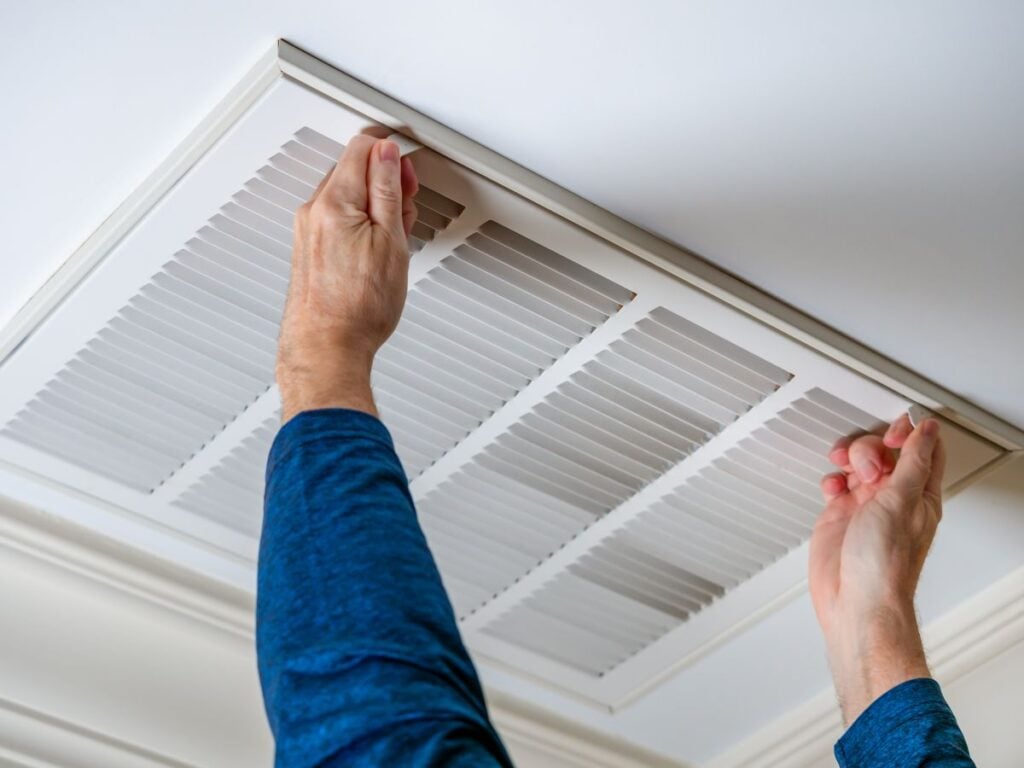
If existing ductwork is leaky, undersized, or poorly laid out, it will limit the performance of even the best new system. A thorough contractor will assess duct condition as part of the installation process and recommend repairs or modifications as needed. Duct sealing and minor repairs add $300 to $1,000. Partial duct replacement or significant reconfiguration can add $2,000 to $5,000. A full new duct system for a home without existing ductwork adds $3,000 to $8,000 or more and represents the single largest variable cost in many installations.
3. Air Handler or Coil Replacement
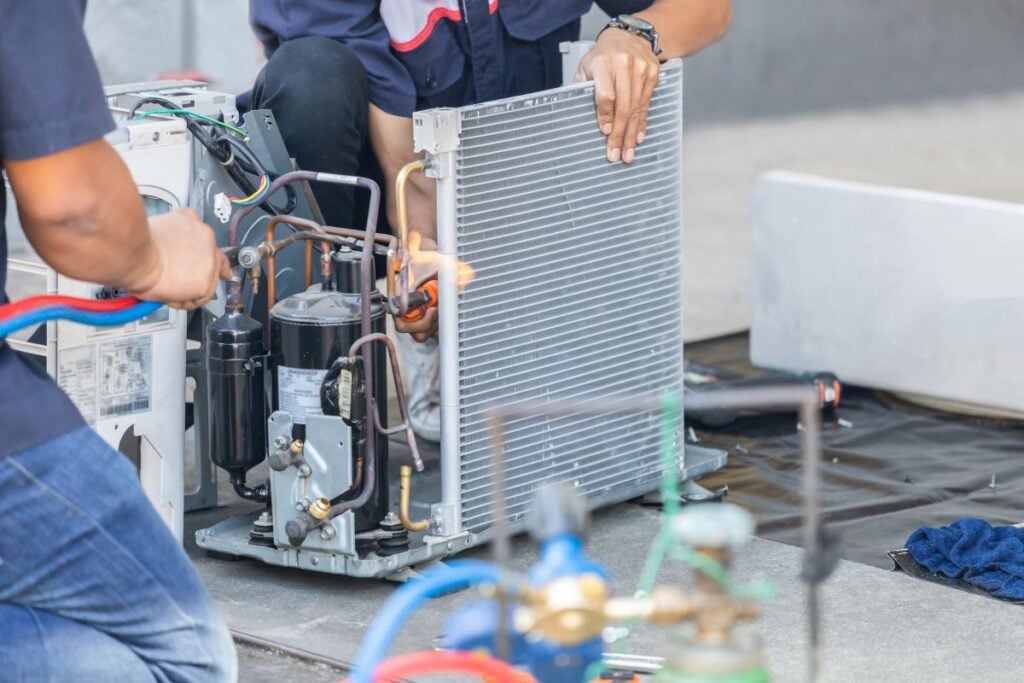
The air handler and evaporator coil are the indoor components of your split-system central AC. When replacing an outdoor condenser unit, contractors often recommend replacing the indoor coil at the same time to ensure the matched system operates at its rated efficiency. A mismatched indoor coil can void the manufacturer’s warranty and reduce performance. Replacing the air handler or evaporator coil adds $1,500 to $3,500 to the project depending on the AC unit size and configuration.
4. Electrical Upgrades
Modern central air systems require a dedicated 240-volt circuit with appropriate amperage. If your home’s electrical panel is already at capacity or does not have a compatible breaker slot, an electrical upgrade will be needed before installation can proceed. A panel upgrade or new circuit installation typically adds $500 to $2,500 depending on the scope of the electrical work required.
5. Permits and Inspections
Massachusetts requires permits for central AC installation in all municipalities. Permit fees typically run $100 to $400 depending on the jurisdiction. New Era handles all permitting as part of every installation, so homeowners do not have to navigate the municipal process on their own. Do not work with any contractor who suggests skipping the permit. Unpermitted HVAC work can create serious complications when selling your home and may void equipment warranties.
6. Brand and Equipment Tier
The brand and product tier you choose affects both upfront cost and long-term reliability. Entry-level systems from reputable manufacturers typically carry 5-year warranties on parts. Mid-tier systems add features like two-stage compressors and better coil construction. Premium systems offer variable-speed compressors, extended warranties, and the best efficiency ratings available. New Era is a certified Bryant Dealer, which means access to the full Bryant product lineup and factory-backed warranty support for every installation.
What Is Included in a Central Air Installation Quote
When comparing quotes from HVAC contractors, make sure you understand exactly what is and is not included. A complete installation quote should cover:
- Equipment: The outdoor condenser unit, indoor evaporator coil or air handler, and lineset.
- Labor: All installation labor including electrical connections, refrigerant charging, and system commissioning.
- Permits: Filing fees and inspection scheduling.
- Load calculation: A Manual J load calculation to confirm proper system sizing for your home.
- Haul-away: Removal and disposal of the old system if applicable.
- Startup and testing: Verifying proper operation, refrigerant charge, and airflow balance before the technician leaves.
Any quote that does not include these items either has them as line-item add-ons or is leaving something out. Always ask for a detailed breakdown before signing.
Common FAQs About Central Air Installation Cost
Homeowners getting ready to move forward with a central air installation tend to ask a consistent set of questions. Here are straightforward answers to the ones we hear most often.
How long does a central air installation take?
A standard replacement of an existing system in a prepared home typically takes one full day. A first-time installation with new ductwork can take two to four days depending on the home’s complexity. Your technician will give you a realistic timeline after the initial assessment.
How do I know what size system my home needs?
System size should always be determined by a Manual J load calculation, which takes into account your home’s square footage, ceiling height, insulation levels, window area, sun exposure, and local climate. Never let a contractor size your system based on square footage alone. An oversized system short-cycles, fails to dehumidify properly, and wears out faster. An undersized system runs constantly and cannot keep up on the hottest days.
Is a heat pump a better choice than a standard central AC?
For many Massachusetts homeowners, yes. A heat pump provides both cooling and heating in a single system. Modern cold-climate heat pumps perform well even in New England winters, and Massachusetts offers substantial Mass Save rebates for qualifying heat pump installations. The upfront cost is higher than a standard AC system, but the ability to replace both your cooling and heating equipment in one project changes the cost-benefit math significantly.
Can I get financing for a central air installation?
Yes. New Era offers flexible financing options through trusted lending partners. A central air installation is one of the larger home improvement investments most homeowners make, and financing allows you to move forward with the right system for your home rather than the most affordable system available on a given day. Ask about current financing terms when you request your quote.
When is the best time of year to install central air?
Spring is the ideal window, typically March through May in Massachusetts. Scheduling before cooling season means you are not competing with emergency replacements, contractors are more available, and you have time to evaluate quotes without pressure. Some contractors also offer off-season pricing discounts. The worst time to install is during a heat wave when demand is highest and scheduling is tightest.
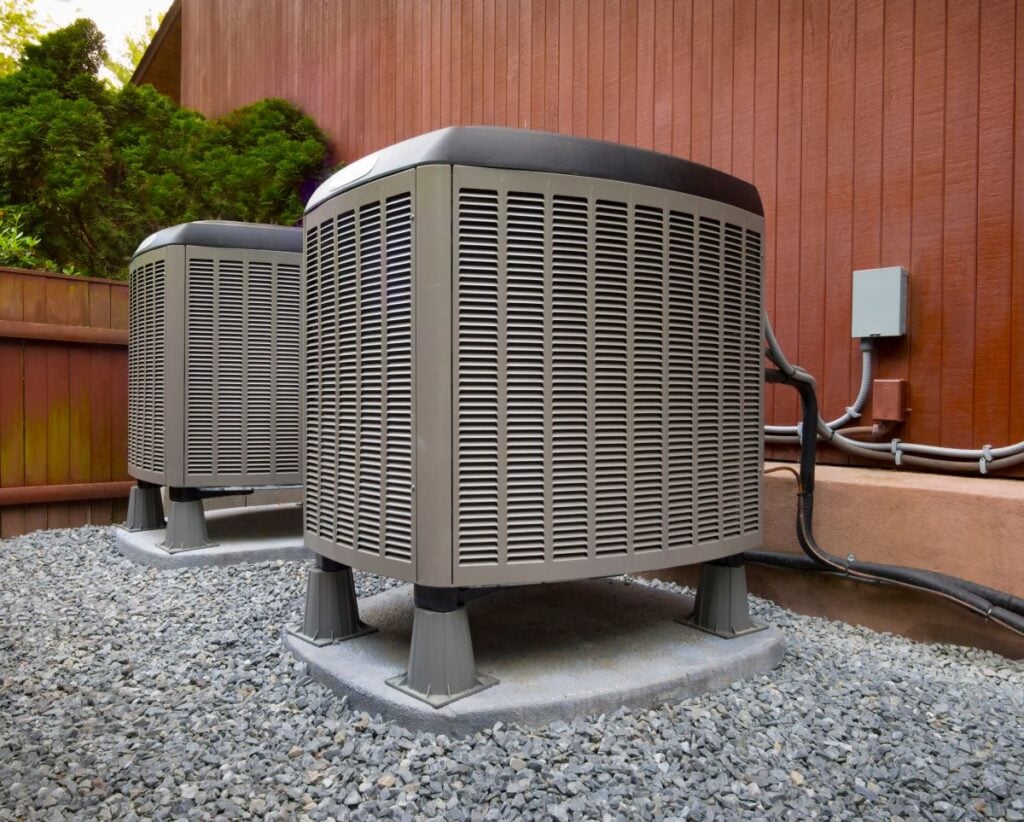
New Era Plumbing & HVAC: Sized Right, Installed Right
A central air installation is a long-term investment in your home’s comfort, and the quality of the installation determines how well it performs for the next 15 to 20 years. At New Era Plumbing & HVAC, every installation starts with a proper load calculation so your system is sized correctly for your home, not guessed at. We are certified Bryant Dealers, we pull all permits, we stand behind our work with strong warranties, and we give you a complete, transparent quote before any work begins. No hidden costs, no shortcuts, just honest service from a team that has been doing this in Massachusetts and southern New Hampshire for over 15 years.
If you are ready to move forward or just want to understand your options, contact our team today to schedule your assessment and get a clear, itemized quote.