
When your air conditioning stops keeping up on a hot day, it rarely fails all at once. More often, the house just stops getting comfortable, the vents feel weak, or the temperature climbs despite the system running constantly. AC not cooling is one of the most common calls HVAC companies receive throughout the summer, and the good news is that many of the causes are straightforward to diagnose and fix. Others point to something more serious that needs a professional. Knowing the difference saves you time, money, and a lot of frustration. If your system is struggling and you need a hands-on assessment, learn more about professional AC repair services and what the diagnostic process looks like. Here is what this guide covers:
- The 8 most common reasons an AC runs but does not cool
- What you can check yourself before calling a tech
- When the problem requires professional service
- How to prevent most cooling failures from happening in the first place
- Frequently asked questions from homeowners in this situation
Why This Matters More Than You Might Think
Air conditioning is not a minor convenience for most households. According to the U.S. Department of Energy, 88% of homes in the United States have air conditioning, and air conditioners account for about 12% of all household electricity use, adding up to roughly $29 billion in annual costs for American homeowners. A system that is running but not cooling is not just uncomfortable. It is consuming electricity at full cost while delivering little to no benefit, which means every hour the problem goes unaddressed is money out of your pocket.
The other reason this matters is that many cooling failures that start as minor issues become major ones quickly. A clogged filter left in place strains the blower and eventually freezes the evaporator coil. A refrigerant leak that causes occasional warm air in your air conditioner eventually leads to compressor damage. Catching the cause early almost always means a less expensive repair.
8 Common Causes Your AC Is Not Cooling
Some of these causes are simple enough to check and fix yourself in under five minutes. Others require a licensed technician with diagnostic equipment.
1. Clogged or Dirty Air Filter
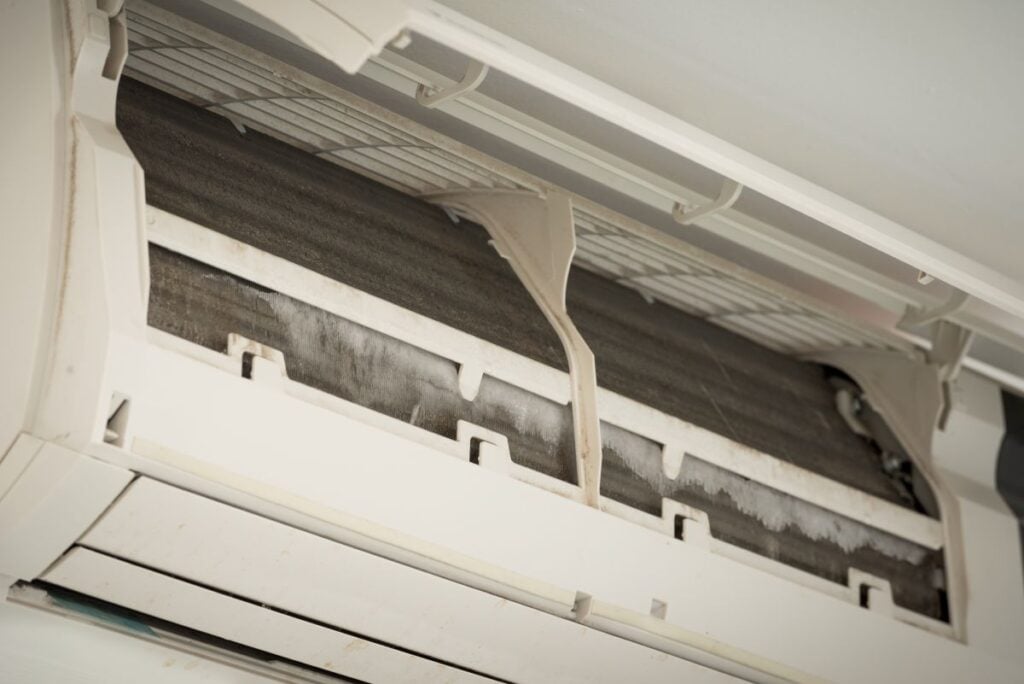
This is the most frequent cause of reduced cooling performance and the easiest to fix yourself. The air filter is the first thing a tech checks on any service call, and for good reason. A clogged air filter that has not been changed in months restricts airflow so severely that the system cannot circulate enough air across the evaporator coil to cool the home effectively. Beyond cooling performance, a neglected filter also hurts indoor air quality by allowing dust, allergens, and debris to circulate freely through your home. The coil may even freeze solid, which completely stops cooling until it thaws. Check your filter first. If it is grey, matted, or visibly clogged, replace it before calling anyone. Filters should be changed every one to two months during the active cooling season.
2. Thermostat Set Incorrectly or Malfunctioning
Before assuming a mechanical problem, confirm the thermostat is set to cool and the temperature is set below the current room temperature. It sounds obvious, but a thermostat accidentally switched to heat or fan-only mode will run the system without producing any cold air. If the thermostat settings look correct but the system still does not respond, the thermostat itself may be reading the temperature inaccurately or failing to send the correct signal to the system. A simple recalibration or battery replacement fixes many thermostat issues. If neither resolves it, a technician can test whether the thermostat needs replacement.
3. Refrigerant Leak
Refrigerant is the substance your system uses to absorb heat from indoor air and release it outside. When refrigerant levels drop due to a leak, the system loses its ability to transfer heat effectively, and cooling output drops noticeably. Signs include ice forming on the refrigerant lines or evaporator coil, a hissing or bubbling sound near the outdoor unit, and a system that runs constantly but cannot reach the set temperature. Refrigerant issues are not a DIY repair. Handling refrigerant requires EPA certification, and the leak itself must be located and sealed before recharging the system. Homeowners in the Concord, MA area who notice these symptoms should schedule a service call rather than waiting for the problem to worsen.
4. Dirty or Blocked Condenser Coils
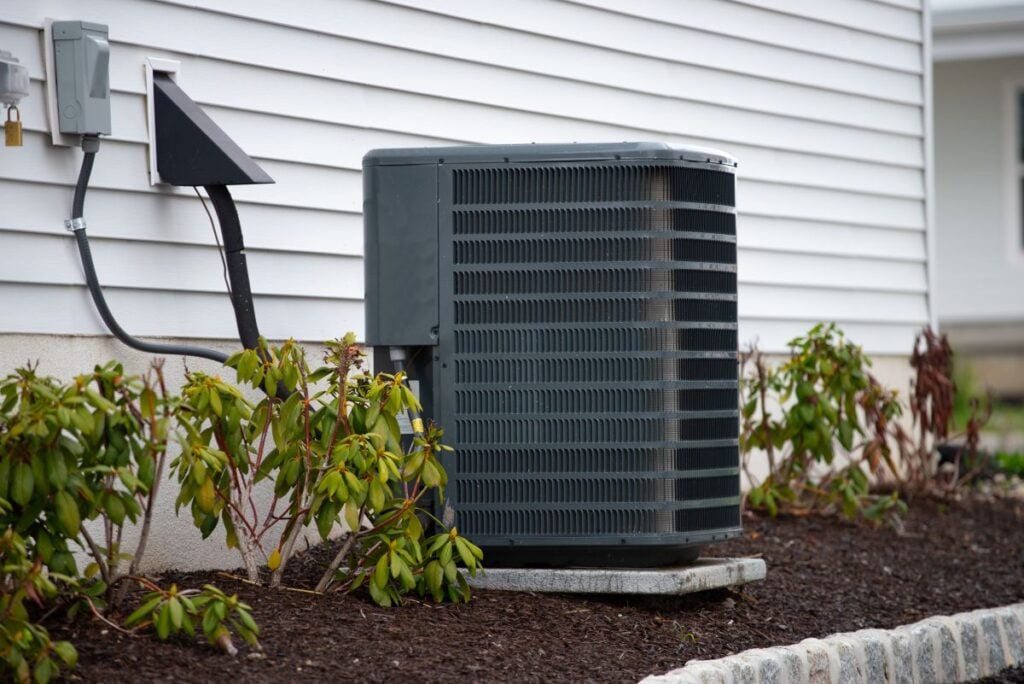
The condenser unit sits outside and is responsible for releasing the heat that your system pulls from inside your home. When the condenser coils become coated with dirt, pollen, cottonwood seeds, or debris, they cannot release heat efficiently. The result is an AC unit that works harder, runs longer, and still cannot cool the home adequately. You can clear large debris from around the unit and gently rinse the fins with a garden hose. Avoid using a pressure washer, which can bend the delicate aluminum fins. If the coils are heavily fouled or the fins are bent, a professional cleaning during a maintenance visit is the better approach.
5. Frozen Evaporator Coil
The evaporator coil sits inside your air handler and absorbs heat from the air passing over it. When airflow across the coil is restricted, whether from a clogged filter, closed vents, or a blower problem, the coil gets too cold and the moisture on it freezes. A frozen coil cannot absorb heat and effectively stops the cooling process entirely. If you notice ice on the indoor unit or refrigerant lines, turn the system off and switch the fan to run-only mode to thaw it. Do not run the system in cooling mode with a frozen coil, as this strains the compressor. Once thawed, address the underlying cause before restarting normal operation.
6. Low Refrigerant Charge
Different from an active leak, an AC system can also be undercharged due to improper previous service. A system running with insufficient refrigerant operates at reduced capacity and efficiency, cooling less than it should while consuming the same amount of electricity. Unlike a major leak, an undercharge may not produce dramatic symptoms. The system just gradually seems like it cannot keep up on warmer days. Only a licensed technician with the proper gauges can verify the refrigerant charge and correct it. This is one of the issues covered during a professional tune-up and is a common finding on systems that have not been serviced in several years.
7. Compressor Problems
The compressor is the heart of the cooling system. A compressor that is struggling, failing, or fully seized will dramatically reduce or eliminate cooling output even if everything else in the system appears normal. Symptoms include the outdoor unit running but producing no cooling, the circuit breaker tripping when the AC starts, unusual noises from the outdoor unit, or the system short-cycling. A compressor diagnosis requires professional equipment and expertise. Depending on the system’s age and warranty status, the repair may involve replacing the compressor or, in some cases, the full system.
8. Duct Leaks or Blocked Vents
A system can be producing perfectly conditioned air and still fail to cool the home if that air never reaches the living spaces. Leaky ductwork can allow a significant portion of cooled air to escape into unconditioned spaces like the attic or crawlspace before it ever reaches a vent. Closed or blocked supply and return vents also disrupt airflow balance and reduce system effectiveness. Walk through your home and confirm all supply and return vents are open and unobstructed. If cooling is consistently poor in certain rooms or zones, a duct leak is worth investigating during a service visit.
DIY Checks vs. Professional Service
Not every cause on this list requires a service call. Here is a clear breakdown of what falls into each category.
| Issue | Can You Fix It Yourself? | When to Call a Pro |
| Dirty air filter | Yes, replace immediately | If replacing does not restore cooling |
| Thermostat settings | Yes, check and adjust | If recalibration does not help |
| Debris around condenser | Yes, clear and rinse | If coils need deep cleaning or fins are bent |
| Closed or blocked vents | Yes, open and unblock | If some rooms still do not cool after |
| Frozen evaporator coil | Partially, thaw by running fan-only | Always address the root cause with a pro |
| Refrigerant leak or low charge | No, requires EPA certification | Immediately, do not delay |
| Compressor issues | No | Immediately, system needs diagnostic |
| Duct leaks | No, requires pressure testing | When zonal cooling issues persist |
We’re proud to serve home and business owners in Concord, MA, and nearby communities with AC repair, maintenance, and more. The warm, humid summers in eastern Massachusetts make a fully functional cooling system essential, and problems that seem minor in May can become urgent by July.
Preventing Cooling Failures Before They Happen
Most of the causes on this list are preventable with consistent maintenance. The single most effective habit is replacing your air filter on schedule every one to two months during the cooling season. Beyond that, an annual professional tune-up in the spring, before you need the system regularly, catches the issues a homeowner cannot see: refrigerant charge, electrical connections, coil condition, blower performance, and drain line flow.
Keeping the area around the outdoor condenser clear of vegetation, debris, and stored items is another easy habit that protects the unit year-round. A two-foot clearance on all sides allows adequate airflow and makes service easier when a technician visits.
Common FAQs About AC Not Cooling
When a cooling system starts underperforming, homeowners tend to have the same set of questions. Here are straightforward answers to the ones we hear most often.
My AC is running but not cooling at all. What should I check first?
Start with the simplest possibilities before assuming a major problem. Check that the thermostat is set to cool mode and the set temperature is below room temperature. Then check the air filter and replace it if it is clogged. Look at the circuit breaker panel to confirm the AC breaker has not tripped. Finally, check the outdoor unit to confirm it is running. If all of those check out and the system is still not cooling, it is time to call a technician.
How long should it take for an AC to cool a house?
A properly sized, well-maintained system should be able to lower indoor temperature by one to two degrees per hour under normal conditions. On extremely hot days, the system may run nearly continuously to maintain the set temperature. If the house never reaches the set temperature even on moderate days, or if cooling seems significantly slower than it used to be, something in the system needs attention.
Why is my AC blowing air but not cold air?
If your system is not blowing cold air despite running, this typically points to a refrigerant issue, a frozen evaporator coil, or a compressor problem. If the blower is running and air is moving through the vents but it is not cold, the system is operating mechanically but failing at the cooling cycle itself. A technician needs to inspect refrigerant charge, coil condition, and compressor function to pinpoint the cause.
Could my AC be too small for my home?
Yes. An undersized system will run nearly constantly in warm weather and never fully cool the home, which can look similar to a performance problem even when the system is technically working correctly. This is especially common in older Massachusetts homes where additions were made without upgrading the HVAC system. A licensed HVAC technician can perform a load calculation to determine whether your system is properly sized for your home’s current square footage and insulation levels.
How much does an AC repair typically cost?
Cost varies widely depending on the cause. A thermostat replacement or capacitor swap runs $150 to $400. A refrigerant recharge or leak repair typically runs $200 to $600 or more depending on the extent of the leak. Compressor replacement is significantly higher. For most diagnostic calls, New Era charges a trip fee that is waived if you move forward with the repair, so you know what you are dealing with before committing to any work.
New Era Plumbing & HVAC: We Find the Real Problem First
An AC that is running but not cooling is frustrating, especially when you cannot tell whether it is a five-minute fix or a major repair. At New Era Plumbing & HVAC, we start every service call with a thorough diagnostic so you always know exactly what is wrong before we recommend anything. No guessing, no pressure, just a clear answer and honest options. We have been diagnosing and repairing cooling systems across Massachusetts and southern New Hampshire for over 15 years, and our team is available same-day for most assessments.
If your system is running but not keeping up, do not let it run all summer at full electricity cost without addressing the problem. Contact our team today to schedule your AC diagnostic and get your home comfortable again.