
If you are looking for a way to heat and cool your home without the expense and disruption of installing ductwork, a mini split heat pump deserves a serious look. These systems have become one of the fastest-growing categories in residential HVAC, and for good reason: they deliver precise, energy-efficient comfort in a single compact installation that handles both heating and cooling. Whether you are adding comfort to a room your current system cannot reach or considering a whole-home solution for a home without ducts, understanding how mini splits work, what they cost, and where they excel helps you make a confident decision. Learn more about ductless mini split installation and service and what the process looks like with New Era. Here is what this guide covers:
- How a mini split heat pump works
- The main types available for residential use
- 7 top benefits homeowners experience
- What mini splits cost to install in 2026
- When a mini split is and is not the right fit
- Frequently asked questions homeowners ask before installing
How a Mini Split Heat Pump Works
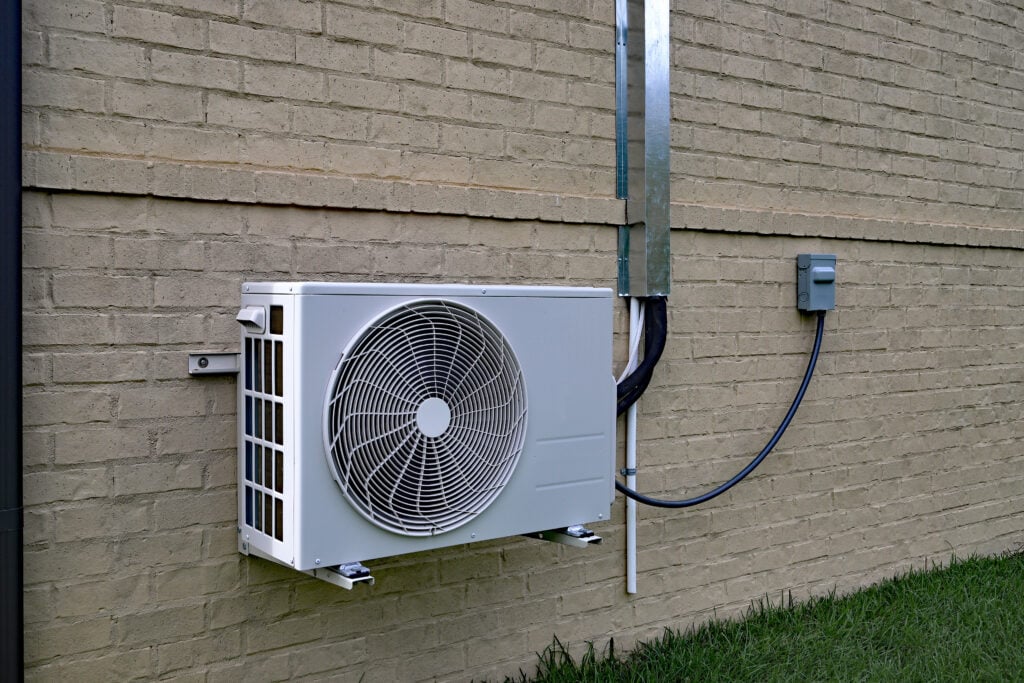
A mini split heat pump uses refrigerant to move heat between the inside and outside of your home rather than generating heat directly. This distinction is what makes it far more efficient than electric resistance heating systems like baseboard heaters or electric furnaces.
In cooling mode, the system works like a conventional air conditioner: the indoor air handler draws warm air from the room, passes it over a refrigerant coil that absorbs the heat, and returns cooled air to the space. The refrigerant carries the absorbed heat to the outdoor unit, where it is released outside. In heating mode, this process reverses. The outdoor unit extracts heat energy from the outdoor air, even in cold temperatures, and transfers it inside. Modern cold-climate mini splits can extract usable heat from outdoor air at temperatures as low as minus 13 degrees Fahrenheit, making them a viable heating solution across New England.
According to ENERGY STAR, ENERGY STAR certified mini split heat pumps use up to 60% less energy than standard home electric resistance heating systems. That efficiency advantage comes from the physics of moving heat rather than generating it — the system uses a relatively small amount of electricity to relocate a large amount of thermal energy, rather than converting electricity into heat on a one-to-one basis.
The system connects the outdoor compressor unit to one or more indoor air handlers through a narrow set of refrigerant lines that pass through a small hole in the exterior wall. No ductwork is required, which eliminates the energy losses that can account for 25 to 30 percent of a typical forced-air system’s output.
Types of Mini Split Heat Pumps
Mini splits come in several indoor unit configurations. The right type depends on room layout, ceiling height, aesthetic preferences, and how the space is used. A licensed HVAC technician can assess the space and recommend the most appropriate configuration before any purchase is made.
Single-Zone System
One outdoor unit connected to one indoor air handler. This is the most common starting point for homeowners adding comfort to a specific room, finished space, or area their central system underserves. Single-zone systems are the least expensive to install and deliver the same efficiency advantages as larger multi-zone setups.
Multi-Zone System
One outdoor unit connected to two, three, four, or more indoor air handlers, each serving a different room or area independently. Each zone is controlled separately, allowing different temperatures in different spaces simultaneously. Multi-zone systems are well suited for whole-home comfort in homes without ductwork, or for homes where specific zones consistently need supplemental conditioning.
Wall-Mounted Air Handler
The most common indoor unit style. Mounts high on the wall near the ceiling and delivers conditioned air across the room. Compact, quiet, and available in a range of capacities.
Ceiling Cassette
Recesses into the ceiling and distributes air in four directions simultaneously. A strong choice for open-plan rooms, larger spaces, or situations where wall-mounted units are aesthetically undesirable.
Floor-Mounted Air Handler
Installs near the floor rather than near the ceiling. Suited for rooms with limited wall space, sloped ceilings, or applications where heated air delivery near floor level is preferred.
7 Top Benefits of a Mini Split Heat Pump

Mini splits offer a distinct combination of advantages that traditional systems cannot match. Here is why Massachusetts homeowners are choosing them in increasing numbers.
- Heating and Cooling in One System: A single mini split installation provides both summer cooling and winter heating. For homes currently relying on baseboard electric heat for winter and window units for summer, replacing both with one mini split system simplifies the mechanical footprint and delivers significant energy savings on both ends.
- No Ductwork Required: Installation requires only a small hole in an exterior wall for the refrigerant line set. There is no need to design or install duct systems, which makes mini splits ideal for older Massachusetts homes with no existing ductwork, historic properties, additions, garages, and finished basements.
- Zone-by-Zone Control: Each indoor air handler operates independently. Household members can maintain different temperatures in different rooms without affecting each other, and unoccupied rooms can be dialed back or turned off entirely without impacting comfort elsewhere.
- Superior Energy Efficiency: By eliminating duct losses and using inverter-driven compressors that adjust output continuously to match demand, mini splits consistently outperform conventional forced-air systems on efficiency. Top-tier models reach SEER2 ratings of 30 and above, compared to 14 to 20 for most central systems.
- Quiet Operation: Mini split indoor air handlers operate at noise levels between 19 and 30 decibels, roughly equivalent to a whispered conversation. The noisier components, the compressor and condenser fan, are outside. This makes mini splits an excellent choice for bedrooms, home offices, and living spaces where sound matters.
- Improved Indoor Air Quality: Each indoor air handler includes multi-stage filtration that captures dust, pollen, allergens, and bacteria at the point of delivery. Without ductwork to accumulate debris over time, air quality benefits remain consistent throughout the life of the system.
- Eligible for Incentives: Qualifying ENERGY STAR certified mini split heat pumps are eligible for Mass Save rebates and, for qualifying equipment, a federal tax credit of up to $2,000. New Era is a Mass Save Heat Pump Installer, meaning our customers have direct access to current rebate programs at the time of installation.
Mini Split Heat Pump Costs in 2026
Installed costs vary based on the number of zones, the capacity of the equipment, and the complexity of the installation. Here is a realistic range for homeowners in Billerica, MA and across northeastern Massachusetts in 2026.
| System Type | Unit Cost | Installed Cost |
| Single-zone (one room) | $700 to $2,000 | $2,500 to $5,000 |
| Two-zone system | $1,500 to $3,500 | $4,500 to $8,000 |
| Three-zone system | $2,500 to $5,000 | $6,500 to $11,000 |
| Four-zone system | $3,500 to $7,000 | $9,000 to $14,000 |
These ranges include the outdoor unit, indoor air handlers, refrigerant line sets, electrical connections, and standard installation labor. They do not include electrical panel upgrades if required, or structural modifications for challenging installation locations.
Mass Save rebates for qualifying heat pump installations can reduce the net cost significantly. New Era’s team will confirm current rebate eligibility during your estimate appointment and help you understand the full incentive picture before any purchase decision is made.
Is a Mini Split the Right Choice for Your Home?
Mini splits are a strong fit in a wide range of situations, but they are not the answer to every comfort problem. Here is a straightforward way to think through the decision.
A mini split is likely the right choice when your home has no existing ductwork, when you are adding comfort to a space your central system cannot reach, when you want independent zone control over different areas of the home, when you are replacing costly electric baseboard or oil heat with a more efficient option, or when you are adding a detached structure like a garage or workshop that cannot practically be connected to the main system.
A mini split may not be the best fit when your home already has modern, well-maintained central ductwork and a properly sized central system that performs well throughout the home, or when the goal is whole-home comfort on a constrained budget where the existing duct infrastructure makes a central system replacement the more cost-effective path.
We’re proud to serve home and business owners in Billerica, MA, and nearby communities with mini split installation, service, and more. The combination of cold winters and warm, humid summers in northeastern Massachusetts makes a system that handles both seasons in a single installation particularly practical for local homeowners.
Common FAQs About Mini Split Heat Pumps
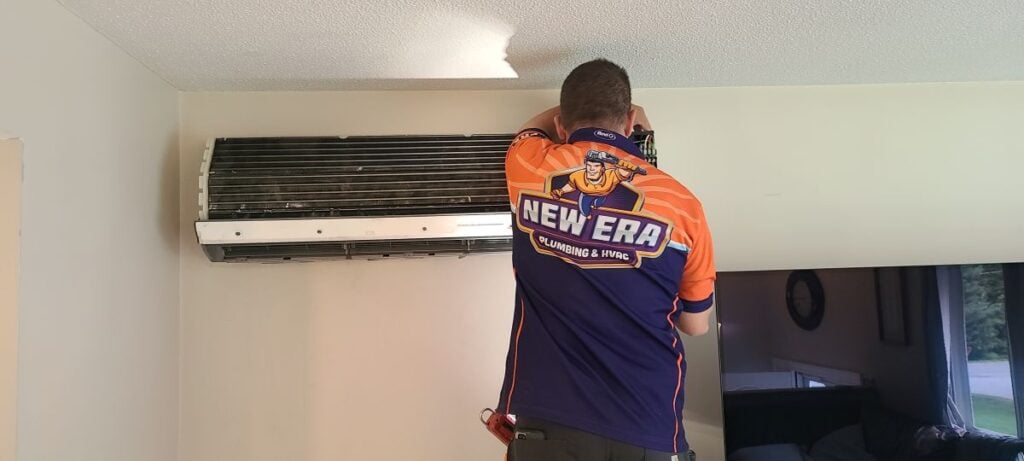
Homeowners researching mini splits for the first time tend to ask the same questions. Here are straightforward answers.
Will a mini split heat my home effectively in a Massachusetts winter?
Modern cold-climate mini splits are designed to operate efficiently at outdoor temperatures down to minus 13 degrees Fahrenheit, well below what most Massachusetts winters regularly produce. Performance does decrease slightly as temperatures drop, but the system continues to provide meaningful heat output throughout the heating season. Many Massachusetts homeowners use mini splits as a primary heating source with a backup system for extreme cold snaps.
How long does mini split installation take?
A single-zone installation in an accessible location typically takes four to six hours. Multi-zone systems with multiple indoor air handlers take longer, often one to two days depending on the number of zones and the complexity of routing the line sets. New Era provides a timeline estimate during the initial assessment so homeowners can plan accordingly.
How long do mini split systems last?
Most quality mini split heat pumps have an expected lifespan of 15 to 20 years with proper maintenance. Annual cleaning of the indoor air handler filters and periodic professional service of the refrigerant system keep the equipment operating efficiently throughout its life.
Can a mini split replace my existing heating system entirely?
For many homes, yes. Homes currently relying on electric baseboard heat, oil heat, or propane are strong candidates for whole-home mini split conversion. The energy savings compared to electric resistance heating are substantial, and the operating costs of a well-sized mini split system are typically lower than oil or propane heat as well. New Era performs a full load calculation before recommending a system configuration to ensure the equipment is appropriately sized for the home’s heating and cooling demand.
Do mini splits require much maintenance?
Maintenance is straightforward. The indoor air handler filters should be cleaned every month or two during active use, which takes only a few minutes. An annual professional service visit to inspect the refrigerant system, clean the coils, and confirm electrical connections is the standard recommendation. Compared to a gas furnace or oil boiler, there is no combustion system to service, which simplifies the annual maintenance picture considerably.
New Era Plumbing & HVAC: Mass Save Certified Mini Split Installers
A mini split heat pump is one of the most effective comfort upgrades available to New England homeowners, and getting the sizing, configuration, and installation right determines how well it performs for the next 15 to 20 years. At New Era Plumbing & HVAC, we are certified Mass Save Heat Pump Installers with the training and equipment to design and install mini split systems that actually deliver on the efficiency and comfort they promise. We walk you through your options honestly, confirm rebate eligibility upfront, and back every installation with strong warranties and transparent pricing.
Contact our team today to schedule your mini split assessment and find out which system is the right fit for your home.