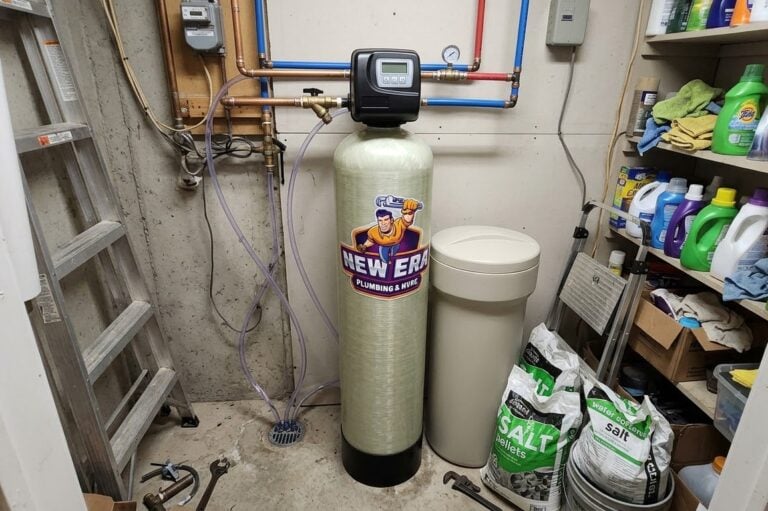
Noticed cloudy water, persistent chlorine odors, reddish rust stains, or crusty limescale on your fixtures? You do not have to settle for poor water quality in Massachusetts. Call New Era Plumbing & HVAC directly at (978) 216-6742 to schedule your Free In-Home Water Quality Assessment or book your evaluation online.
If you are dealing with bad-tasting tap water, chemical chlorine smells, orange rust streaks in your sinks, or white scale choking your showerheads, you have probably started searching for a whole house water filtration system. However, walking down the plumbing aisle or browsing online reveals a confusing maze of sediment cartridges, carbon tanks, water softeners, and specialty media filters.
The most critical fact homeowners must understand is that no single filter technology solves every water problem. Choosing the wrong filtration unit will leave your family's actual water concerns unresolved, restrict your home's water pressure, and cost you thousands of dollars in wasted equipment. In this guide, we break down how sediment, carbon, and specialty filtration systems work, compare the specific problems each technology solves, and explain why certified water testing is the only reliable way to protect your plumbing and health.
To select the correct whole house water filtration system, you must match the filtration mechanism directly to the specific physical, chemical, or mineral contaminants identified in your water supply:
• Sediment Filtration mechanically captures suspended physical particles—such as well sand, silt, pipe grit, and loose rust flakes—to clear water turbidity and protect downstream valves and appliances.
• Carbon Filtration uses chemical adsorption to remove chlorine, chloramines, volatile organic compounds (VOCs), unpleasant tastes, odors, and PFAS chemicals, delivering clean water for drinking, cooking, and bathing.
• Specialty Filtration addresses dissolved minerals, metals, and biological risks that physical filters cannot touch—including ion-exchange water softeners for hard water scale, air-injection oxidation systems for dissolved iron and manganese, calcite neutralizers for acidic water, and ultraviolet (UV) systems for bacterial disinfection.
Because groundwater and municipal water chemistry vary dramatically across Massachusetts, professional water testing must always precede equipment selection. Testing establishes your exact water profile so a licensed plumber can install a correctly sized multi-stage treatment setup without causing household water pressure drops.
1. Understanding Massachusetts Water: Municipal Supplies vs. Private Wells
Water concerns in Massachusetts generally fall into two distinct categories depending on whether your home is connected to a municipal water utility or draws from a private bedrock well:
Municipal Water Supplies (Dracut, Lowell, Methuen, Haverhill)
City and town water districts—such as the Dracut Water Supply District (DWSD) or Lowell Regional Water Utility—treat municipal water to meet strict federal and state drinking standards. However, municipal delivery introduces secondary issues:
- Chlorine & Chloramines: Water utilities add chlorine or chloramines (a blend of chlorine and ammonia) to kill bacteria during transit through miles of municipal mains. While safe biologically, these chemicals leave an aggressive bleach-like odor, dry out sensitive skin and hair during hot showers, and create chemical disinfection byproducts (DBPs).
- Aging Distribution Sediment: Historic cast-iron water mains throughout Middlesex and Essex counties frequently shed fine rust particles, pipe scale, and grit during high-flow events or hydrant flushing.
- PFAS / Forever Chemicals: Massachusetts enforces a strict 20 parts per trillion (ppt) standard for six specific PFAS compounds (PFAS6). Homeowners seeking an extra line of defense against industrial chemicals increasingly turn to catalytic carbon and whole-home filtration.
- Municipal Hardness: Many local municipal supplies test between 6.5 and 9.5 grains per gallon (GPG), creating noticeable limescale buildup on faucets and inside water heaters.
Private Bedrock Wells (Rural Middlesex & Essex Counties, Southern NH Border)
Homes in outlying neighborhoods of Dracut, Littleton, Groveland, or along the New Hampshire state line rely on deep bedrock wells drilled into New England granite formations. Common well water concerns include:
- Dissolved Iron & Manganese: Water seeping through granite dissolves clear-water ferrous iron and manganese. Once exposed to air, the iron oxidizes into bright orange rust stains, while manganese forms dark black flecks and grease-like staining.
- Severe Water Hardness: Private well water in our region routinely tests between 12 and 22+ GPG, rapidly destroying tankless water heaters, boilers, and dishwasher heating coils.
- Acidic Water (Low pH < 6.5): New England groundwater is frequently acidic. Acidic water dissolves copper piping from the inside out, leaving telltale blue-green stains in porcelain sinks and eventually causing expensive pinhole pipe leaks behind finished drywall.
- Sediment & Silt: Deep well pumps can pull fine bedrock grit, sand, and clay particles into your plumbing system.
2. Quick-Reference Matrix: Matching Water Concerns to Filtration Technologies
The comparison matrix below details how the three core filtration categories correspond to everyday water symptoms:
| Water Concern / Clue | Filtration Category | Primary Technology | What It CANNOT Solve |
|---|---|---|---|
| Visible sand, silt, turbidity, pipe flakes | Sediment Filtration | Pleated polyester or spun polypropylene (5–50 micron) | Cannot remove chlorine, odors, hard scale, or bacteria |
| Bleach/chlorine smell, bad chemical taste | Carbon Filtration | Catalytic Carbon or Granular Activated Carbon (GAC) | Cannot remove calcium/magnesium hardness or dissolved iron |
| Crusty white limescale, failing tankless heater | Specialty (Water Softener) | Ion-exchange cation resin beads with salt regeneration | Cannot remove chlorine, chemicals, or heavy sand sediment |
| Reddish-orange rust or black manganese stains | Specialty (AIO Iron Filter) | Air-injection oxidation (Katalox Light, Greensand, Birm) | Cannot eliminate mineral hardness, chlorine odors, or bacteria |
| Blue-green copper stains, pinhole pipe leaks | Specialty (Acid Neutralizer) | Sacrificial Calcite (calcium carbonate) media bed | Slightly raises hardness; cannot remove chlorine or chemicals |
| Coliform bacteria or well contamination risk | Specialty (UV Disinfection) | Germicidal 254 nm ultraviolet quartz sleeve lamp | Cannot remove physical dirt, chemicals, or mineral scale |
3. Deep-Dive: The Three Core Water Filtration Technologies
1. Sediment Filtration: The Mechanical First Line of Defense
Sediment filters act as physical sieves, trapping suspended particulates before they can enter your home's distribution piping.
- Micron Ratings Explained: Filter porosity is measured in microns. A standard whole-house sediment filter ranges from 50 microns (captures coarse sand visible to the naked eye) down to 5 microns (captures fine clay, silt, and microscopic rust flakes).
- Cartridge Formats: Plumbers commonly install heavy-duty Big Blue (4.5" x 10" or 4.5" x 20") filter housings equipped with dual-gradient spun polypropylene cartridges or washable pleated polyester cartridges. For high-volume sand in well water, a self-flushing spin-down sediment trap is installed ahead of the cartridge filter.
- Why Sediment Filtration is Mandatory: Even if your primary goal is removing chlorine or softening hard water, a sediment filter is the essential Stage 1 guardian. Without it, abrasive grit will clog delicate solenoid valves in washing machines, scratch ceramic faucet cartridges, foul the ion-exchange resin in your water softener, and choke expensive carbon blocks within months.
2. Carbon Filtration: Chemical Adsorption for Health and Taste
While sediment filters trap solid particles, carbon filters target dissolved chemical compounds through a process called adsorption—where contaminants adhere molecularly to the vast porous surface area of activated carbon.
- Standard GAC vs. Catalytic Carbon: Standard Granular Activated Carbon (GAC) is effective at removing free chlorine, bad tastes, and chemical odors. However, many municipal water systems in Massachusetts now disinfect with chloramines (chlorine bonded with ammonia). Standard carbon cannot break the strong chloramine bond efficiently. For these supplies, New Era installs Catalytic Carbon, an enhanced, chemically activated carbon media specifically designed to decompose and eliminate chloramines and hazardous volatile organic compounds (VOCs).
- Why Whole-Home Carbon Matters (Beyond Drinking Water): Many families rely on small refrigerator filters or countertop pitchers for drinking water. However, when you take a hot shower, municipal chlorine and volatile compounds vaporize into the steam you inhale, while hot water opens skin pores to absorb chemicals. A whole-house carbon system ensures that every faucet, shower, and bath produces clean, odor-free, non-irritating water.
3. Specialty Filtration Systems: Custom Problem-Solvers
When water testing uncovers dissolved minerals, low pH, or heavy metals, standard sediment and carbon filters will not protect your home. This is where dedicated specialty treatment systems are required:
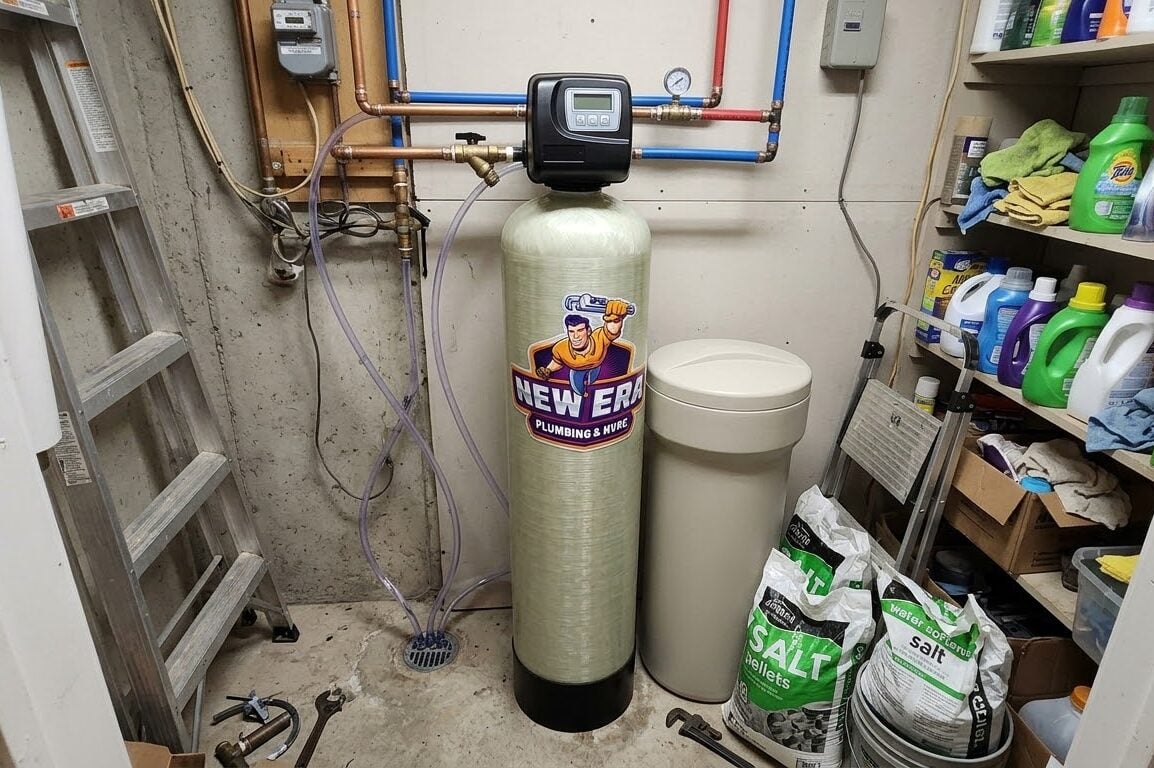
- Water Softeners (Ion-Exchange): Specifically engineered to eliminate dissolved calcium and magnesium ions that cause hard water scale. By replacing hard minerals with trace sodium ions across a food-grade resin bed, a water softener stops limescale accumulation, prevents premature failure of high-efficiency tankless water heaters, and cuts household detergent spending in half.
- Air-Injection Oxidizing (AIO) Iron & Manganese Filters: Clear-water iron dissolved in well water cannot be captured by a sediment filter because it is completely dissolved in liquid form. An AIO system injects a pocket of compressed air into the top of the filter tank to rapidly oxidize dissolved iron and manganese into solid rust particles, which are then trapped in a catalytic media bed (such as Katalox Light or Birm) and automatically backwashed down the drain.
- Calcite Acid Neutralizers: If your well water tests below 6.8 pH, it is corrosive. Passing acidic water through a sacrificial bed of crushed calcium carbonate (Calcite) naturally raises the pH to a neutral 7.0–7.4, neutralizing acidity and ending the chemical corrosion that destroys copper pipes and water fixtures.
- Ultraviolet (UV) Disinfection Systems: For private wells prone to seasonal runoff or microbial vulnerability, a germicidal UV system irradiates passing water with 254-nanometer light, destroying the DNA of bacteria, viruses, and parasites without adding toxic chemicals.
Not Sure Which Filter Combination Your Home Needs?
Don't spend money on guesswork. Let a licensed Massachusetts Master Plumber test your water supply on-site and design a high-efficiency system tailored to your home's exact plumbing layout.
4. Why Professional Water Testing Must Guide Your Equipment Selection
The biggest mistake homeowners make when investing in whole house water filtration is purchasing an all-in-one system from a big-box retailer before testing their water. There is no universal filter that handles every water supply. In fact, installing equipment without prior testing frequently makes plumbing problems worse:
Fouling Expensive Filters
Installing a whole-home carbon filter on well water with unmeasured dissolved iron permanently coats the carbon pores in rust within weeks, destroying the filter media and creating foul sulfur-like odors.
Severely Reduced Water Pressure
Undersized filter housings or improper micron ratings can drop household water pressure from a comfortable 60 PSI down to a trickle when two showers run simultaneously.
What a Professional Water Quality Assessment Evaluates
New Era Plumbing & HVAC conducts comprehensive on-site testing to measure:
- Water Hardness (in Grains Per Gallon - GPG): Determines whether an ion-exchange softener is needed to protect your heating equipment.
- Total Dissolved Solids (TDS): Evaluates overall dissolved mineral and salt concentrations.
- pH Level: Identifies whether corrosive acidity requires a neutralizing media filter.
- Iron & Manganese Concentrations (PPM): Measures both dissolved (ferrous) and particulate (ferric) metals.
- Chlorine & Chloramine Residuals: Pinpoints municipal disinfectant levels to specify standard vs. catalytic carbon.
For rural well owners requiring testing for heavy metals, volatile industrial chemicals, or PFAS, we help collect and interpret samples through MassDEP-certified environmental laboratories in Massachusetts.
5. Massachusetts Plumbing Code & Safety Limits: Why DIY Filtration is High-Risk
Installing a whole house water filtration system is not a simple weekend do-it-yourself project. Because filtration systems tap directly into your primary drinking supply and connect to household drainage lines, Massachusetts maintains strict regulatory standards to safeguard public health and property.
Under the Massachusetts State Plumbing Code (248 CMR), any alteration or installation connected to the potable water supply must be permitted and installed by a licensed Master or Journeyman Plumber. Here is why that protection matters to you as a homeowner:
- Air Gap Backflow Protection: Backwashing filtration systems (such as iron filters and water softeners) periodically flush concentrated discharge into a basement drain. State code mandates a physical, air-gapped discharge connection. Connecting a backwash hose directly to a sewer pipe without an air gap creates a severe hazard where raw sewage can siphon backward into your family's drinking supply during a drain backup.
- Three-Valve Full-Port Bypass Loop: A code-compliant installation includes a dedicated three-valve bypass manifold constructed with full-port ball valves. This allows homeowners to isolate the filter bank for routine cartridge changes or emergency maintenance without shutting off water to the rest of the house.
- Pressure Drop & Flow Rate Engineering: Whole-house systems must be hydraulically sized based on your home's total bathroom count and peak flow demands (typically 12 to 15+ gallons per minute). Licensed plumbers select 1-inch or 1.25-inch high-flow ports to ensure zero noticeable pressure loss across simultaneous fixtures.
- Homeowners Insurance Security: Unpermitted DIY plumbing work that causes basement flooding or pipe joint failure can result in denied insurance claims. Working with a licensed contractor guarantees code compliance, warranty protection, and peace of mind.
Frequently Asked Questions About Whole House Water Filtration
Clear, honest guidance from licensed Massachusetts plumbers to help you choose the right filtration setup.
Can a single whole house filter solve all my water problems?
No. No single filter technology removes every category of contaminant. Sediment filters only stop physical grit; carbon filters only remove chemicals and odors; and water softeners only eliminate dissolved hardness minerals. Comprehensive water treatment typically requires a coordinated multi-stage system (such as a 5-micron sediment pre-filter, followed by a catalytic carbon tank and an ion-exchange water softener) customized to your specific water test results.
What is the difference between a sediment filter and a carbon filter?
The difference lies in how they clean water. A sediment filter acts like a mechanical screen to trap physical particles (sand, dirt, rust chips) that make water look cloudy or gritty. A carbon filter works at a molecular level through chemical adsorption, soaking up chlorine, chloramines, volatile organic compounds (VOCs), and unpleasant tastes that make tap water smell and taste like chemicals. Sediment filters clarify; carbon filters purify taste and smell.
Do I need both a water softener and a whole house water filtration system?
In many Massachusetts homes, yes. A whole house water filtration system removes chlorine, sediment, and chemicals, but it does not remove dissolved calcium and magnesium minerals that create hard water scale. If your water tests at 7 GPG or higher, installing a water softener alongside a whole house filtration system provides complete protection—delivering chlorine-free drinking water while shielding your tankless water heater, boiler, and fixtures from scale buildup.
How often do whole house filter cartridges need to be replaced?
Replacement frequency depends on your water quality and household consumption. As a rule of thumb, whole-house sediment pre-filters are replaced every 3 to 6 months to prevent pressure restriction. Carbon block cartridges typically last 6 to 12 months. Large backwashing tank-based carbon or specialty media systems can operate for 5 to 10 years before the media bed requires replacement by a professional.
Will installing a whole house filter reduce my home's water pressure?
Not when properly sized and installed. A professionally designed system uses high-flow filter housings (such as 4.5" x 20" Big Blue housings or full-size backwashing tanks) with 1-inch or 1.25-inch internal plumbing to handle 12 to 15+ gallons per minute. Pressure drops only occur when systems are undersized for the home's fixture count or when filter cartridges become clogged with neglected sediment.
Can I install a whole house water filtration system myself in Massachusetts?
No. Under the Massachusetts State Plumbing Code (248 CMR), any installation that cuts into the primary potable drinking supply or connects to a drain system requires a municipal plumbing permit and must be performed by a licensed Master or Journeyman Plumber. Licensed installation guarantees code-compliant backflow prevention, proper bypass valve loops, and protects your home insurance coverage.
6. Get Pure, Reliable Water Throughout Your Massachusetts Home
You do not have to live with smelly tap water, ruined appliances, rust-stained plumbing fixtures, or persistent limescale. Experience the comfort of pristine, crystal-clear water at every faucet with New Era Plumbing & HVAC.
Why Homeowners Across the Merrimack Valley Choose New Era:
- Master Plumber Standards: Every system is evaluated, permitted, and installed under the supervision of Master Plumber Soryia Dan Pen (MA License #16290-PL-M / NH License #1708805).
- 1,100+ 5-Star Reviews: Top-rated customer satisfaction across Middlesex and Essex counties.
- Complimentary In-Home Testing: Zero-obligation water analysis with transparent recommendations tailored to your exact plumbing layout.
- Single-Source Plumbing Care: From comprehensive whole-home water filtration and water softener installations to high-efficiency tankless water heater replacements.
Call New Era Directly: (978) 216-6742
Book Online: Schedule Your Free Water Quality Assessment