
A clogged drain is one of those problems that starts small and gets worse fast. What begins as a slightly slow sink can turn into a standing water situation within days, and what seems like a simple fix can sometimes signal something more serious happening deeper in your plumbing. The good news is that most drain clogs have a clear cause, and knowing what that cause is helps you decide whether a plunger will do the job or whether it is time to call in a professional. This guide walks through the most common culprits, the warning signs that go beyond a simple fix, and exactly what a professional drain cleaning service can do that a hardware store product cannot. Learn more about professional drain cleaning services and what the process involves. Here is what this guide covers:
- The 10 most common causes of clogged drains
- Signs the problem is bigger than a standard clog
- What you can handle yourself vs. when to call a pro
- How professionals clear drains and diagnose the root cause
- Frequently asked questions homeowners ask about drain clogs
Why Clogged Drains Deserve More Attention Than They Get
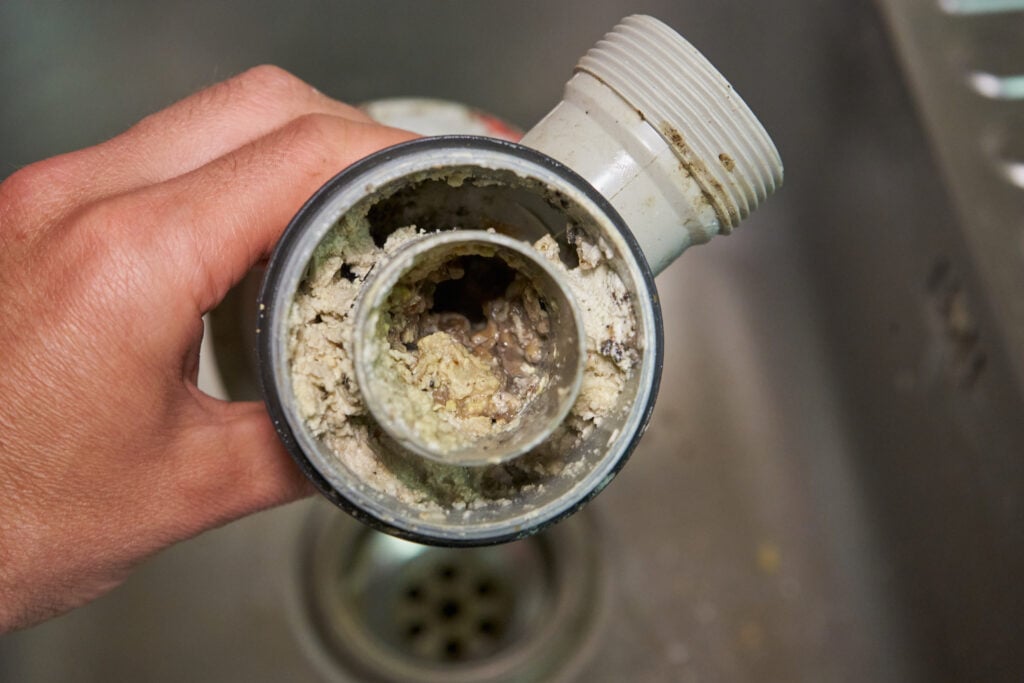
Most homeowners reach for a bottle of chemical drain cleaner the moment a drain slows. It is an understandable instinct, but chemical cleaners provide temporary relief at best. They may open a small channel through the blockage without removing the buildup coating the pipe walls, which means the clog returns within weeks. The EPA has also advised homeowners to avoid harsh chemical drain cleaners because they can accelerate corrosion in aging plumbing systems. According to the EPA, fats, oils, and grease from homes, restaurants, and industrial sources are the most common cause of reported sewer blockages nationwide, responsible for approximately 47% of all blockages. Understanding what is causing your specific clog is the first step toward fixing it for good.
10 Common Causes of Clogged Drains
The cause of a clog largely determines how difficult it is to clear and whether a DIY approach is likely to work. Here is a breakdown of the most common culprits homeowners encounter and what makes each one worth understanding.
1. Grease and Fat Buildup
Kitchen drains are the most common site of grease-related clogs. Cooking oils, bacon fat, and food residue enter the drain in liquid form but cool and solidify along pipe walls as they travel through the system. Over time, these deposits narrow the pipe interior until flow slows to a stop. Running hot water while pouring grease down the drain does not prevent buildup. It simply moves the problem further down the line.
2. Hair and Soap Scum
Bathroom drain clogs are almost always a combination of hair and soap scum. Hair binds together and anchors to pipe walls and fittings. Soap residue builds up around that hair mass, creating a dense, sticky blockage that traps everything else passing through. A basic drain strainer over the shower or tub drain catches most hair before it enters the pipe and is one of the simplest preventive measures a homeowner can take.
3. Flushable Wipes and Non-Flushable Items
Despite what the packaging suggests, most products labeled as flushable do not break down the way toilet paper does. They remain largely intact and can snag on pipe joints or existing buildup deep in the line. Cotton balls, dental floss, paper towels, and hygiene products create the same problem. Only toilet paper belongs in the toilet.
4. Food Debris and Coffee Grounds
Even homes with garbage disposals accumulate food-related clogs over time. Coffee grounds and eggshells clump together in drain pipes rather than washing through cleanly. Starchy foods like pasta and rice absorb water and expand. Fibrous vegetables wrap around disposal blades and fittings. Periodic professional cleaning keeps kitchen lines clear of the gradual accumulation that builds up regardless of careful habits.
5. Tree Root Intrusion
Roots from trees and shrubs naturally seek moisture, and the joints and small cracks in underground sewer lines are a reliable source of it. Once a root finds its way in, it grows and traps debris, progressively restricting flow. Root intrusion is common in older neighborhoods throughout North Andover, MA where mature trees grow near sewer laterals. Unlike a grease or hair clog, roots cannot be cleared with a plunger or chemical cleaner. Professional equipment is required, and a camera inspection often reveals whether the intrusion has caused any pipe damage.
6. Mineral and Scale Buildup
Hard water leaves calcium and magnesium deposits on every surface it contacts, including the interior of drain pipes. Over time, mineral scale narrows the pipe’s effective diameter and creates a rough surface that traps debris more easily. Scale buildup rarely causes a sudden blockage on its own but significantly accelerates clogs caused by grease, soap, or other debris.
7. Pipe Damage or Deterioration
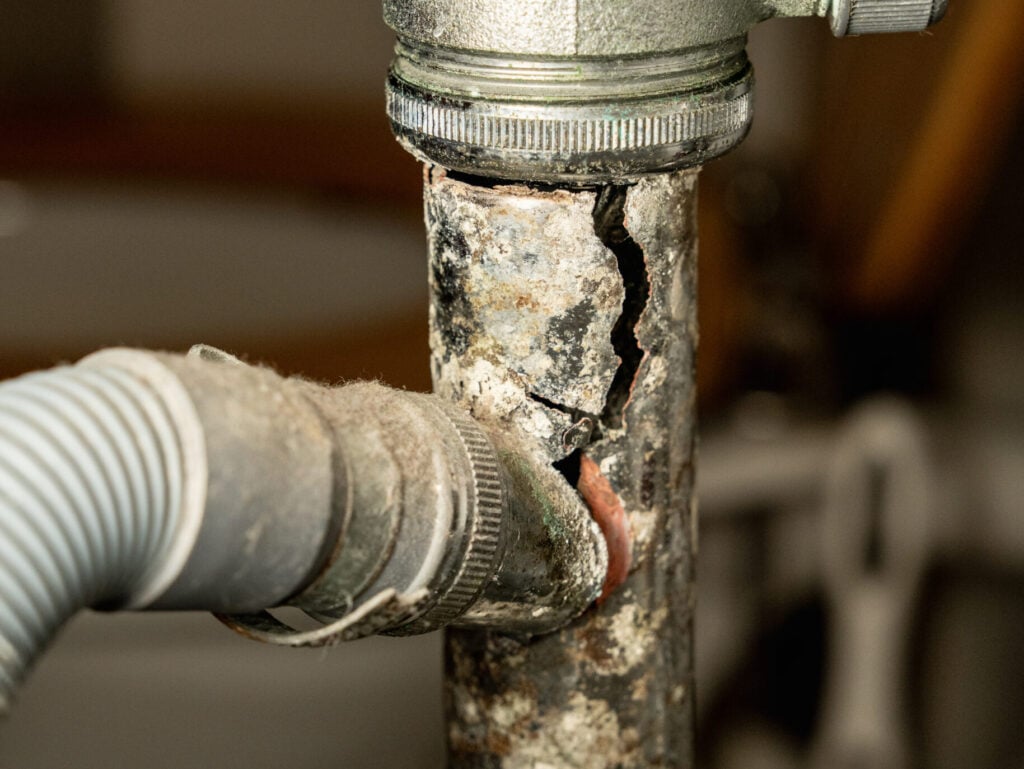
Sometimes the clog is a symptom rather than the primary problem. Cracked pipes, offset joints, collapsed sections, and corroded pipe walls all create conditions that make clogs more likely and harder to clear. Older homes in Massachusetts frequently have clay or cast iron drain lines that have degraded over decades. A drain that clogs repeatedly despite regular cleaning often points to the condition of the pipe itself. A camera inspection confirms whether the pipe is the issue.
8. Foreign Objects
Small objects that fall into drains, whether a bottle cap in the bathroom sink, a utensil in the kitchen, or a child’s toy near a floor drain, can lodge in the trap or pipe fitting and create an anchor point for debris to accumulate. These blockages do not respond well to chemical cleaners or basic plunging because the object itself is the problem. A professional with the right retrieval tools or camera equipment can locate and remove the item without damaging the pipe.
9. Poorly Vented Drain Lines
Every drain in your home requires a vent to allow air into the pipe as water flows through it. Without adequate air, drains create a vacuum that slows water flow and produces gurgling sounds. While a poorly vented drain does not create a traditional clog, it mimics one closely enough that many homeowners treat it as one. If slow drains and gurgling persist after cleaning, venting may be the underlying issue, which requires a licensed plumber to assess and correct.
10. Septic System Backup
For homes on private septic systems, a drain that slows throughout the house simultaneously can indicate that the septic tank is full or that the drain field is failing rather than a traditional pipe clog. Septic-related backups require a completely different response than a standard drain cleaning. Pumping the tank, inspecting the distribution system, and evaluating the drain field condition are all part of addressing a septic-related drainage problem. Treating it like a pipe clog and snaking the line will not resolve the underlying issue.
DIY vs. Professional: How to Know Which You Need
Not every clogged drain requires a service call, but some situations clearly do. Here is a quick framework. Handle it yourself when a single fixture is draining slowly and a plunger or basic snake resolves it quickly, or when a visible hair clog at the drain surface is the obvious cause.
Call a professional when:
- Multiple drains are slow or backed up at once: This signals a main line issue that requires professional equipment.
- The toilet gurgles when you run the sink: Cross-fixture symptoms point to a shared drain or sewer line problem.
- Clogs return within days or weeks: Recurring clogs mean the cause has not been addressed.
- Sewage odor persists inside the home: This suggests organic buildup, a dry trap, or a deeper sewer line issue.
- DIY methods have not worked: Forcing the issue with continued plunging risks damaging the pipe.
We’re proud to serve home and business owners in North Andover, MA, and nearby communities with professional drain cleaning, camera inspection, and more. The older housing stock throughout the Merrimack Valley means aging drain lines are a common issue for local homeowners.
What Professional Drain Cleaning Involves
Professional drain cleaning starts with proper diagnosis and uses the right tool for the confirmed problem.
- Camera inspection: A video camera identifies the blockage location, cause, and any pipe structural issues before any work begins.
- Drain snaking: A motorized cable snake clears most standard residential clogs and reaches blockages a household snake cannot.
- Hydro jetting: High-pressure water fully cleans the interior pipe walls, removing grease, scale, and debris rather than just punching through the clog.
- Root cutting: Specialized attachments clear root intrusion from sewer laterals, followed by a camera inspection to assess pipe condition.
Common FAQs About Clogged Drains
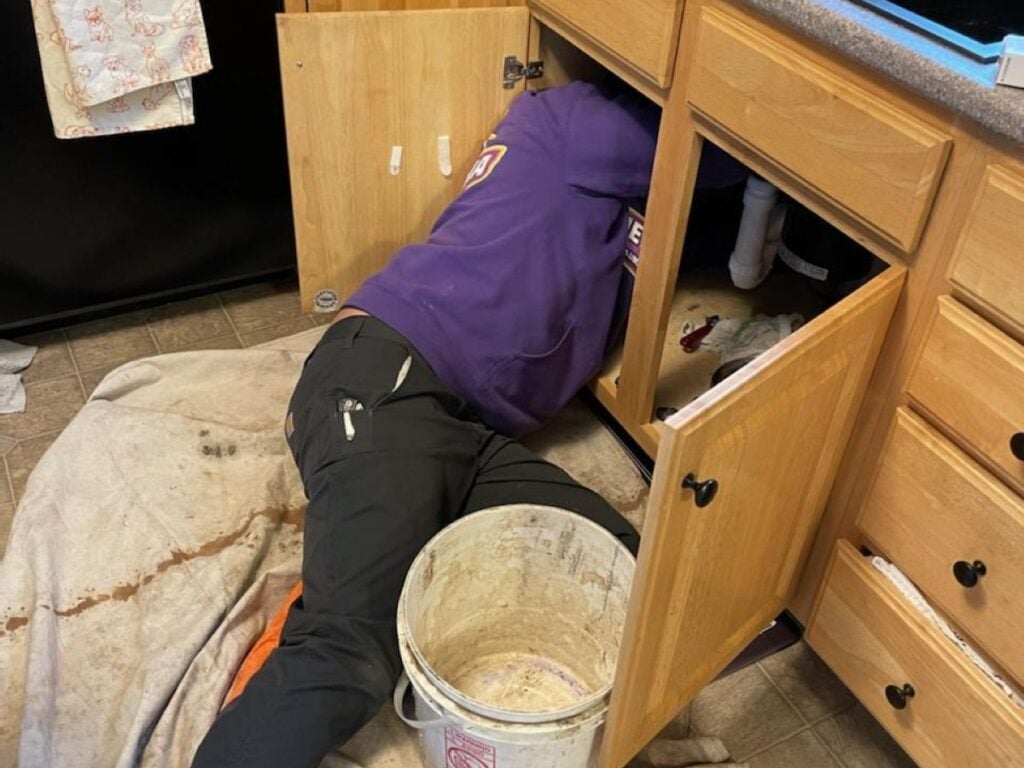
Homeowners dealing with drain issues tend to ask the same questions. Here are straightforward answers.
Are chemical drain cleaners safe to use?
For occasional use on a minor, isolated clog, a chemical cleaner may provide temporary relief. However, they are not a long-term solution and can cause real damage in older pipes. The EPA advises against relying on them in aging plumbing systems. If a drain is slow or clogged repeatedly, a professional cleaning is the more effective and safer approach.
How often should drains be professionally cleaned?
For most households, having main drain lines professionally cleaned every one to two years is a reasonable preventive schedule. Kitchen drains used heavily for cooking benefit from more frequent attention. Homes with trees near the sewer lateral, older clay or cast iron pipes, or a history of recurring clogs may need annual cleaning to stay ahead of the problem.
Can a clogged drain cause other plumbing problems?
Yes. A blockage that goes unaddressed long enough can cause pressure to build in the drain system, which can force water back up through floor drains, toilets, or other fixtures. In severe cases, prolonged pressure can stress pipe joints and connections. Catching and clearing a clog early is always less expensive than dealing with the downstream consequences of leaving it in place.
What is the difference between a drain clog and a sewer line problem?
A drain clog affects one fixture or a small group of fixtures served by a shared branch line. A sewer line problem affects multiple fixtures throughout the home simultaneously and often involves backflow, gurgling across fixtures, or sewage odors. Drain clogs are typically resolved with snaking or hydro jetting. Sewer line problems may require camera inspection, hydro jetting, root cutting, or in some cases trenchless repair.
Will a plunger make a clog worse?
In most cases, no. A plunger is a safe first step for a simple clog in a sink, tub, or toilet. The exception is if the pipe downstream of the clog is already damaged or weakened, in which case aggressive plunging can stress the pipe further. If plunging does not clear the clog after a few attempts, stop and call a professional rather than continuing to force the issue.
New Era Plumbing & HVAC: Find the Cause, Fix It Right
A drain that keeps clogging is trying to tell you something. At New Era Plumbing & HVAC, we start every drain service with a proper assessment so you know exactly what is happening in your pipes before we recommend any work. Whether it is a straightforward cleaning, a hydro jet service, or a camera inspection to check for a deeper issue, we give you an honest answer and transparent pricing before anything begins. We have been serving Massachusetts and southern New Hampshire homeowners for over 15 years, and we stand behind every job with strong warranties and upfront quotes.
Contact our team today to schedule your drain cleaning or camera inspection and get to the bottom of the problem for good.