
If your home lacks ductwork, has a room that never quite gets comfortable, or you are adding a new space that your current system cannot reach, a ductless air conditioner may be the most practical solution available. These systems have become increasingly popular across New England over the past decade, and for good reason: they deliver precise, zone-controlled comfort without the expense and disruption of installing or extending ductwork throughout a home. They are not the right fit for every situation, but for many Massachusetts homeowners, the case for going ductless is compelling. If you want to explore whether one makes sense for your home, learn more about ductless mini split installation and service and what the process involves. Here is what this guide covers:
- How ductless air conditioners work and what sets them apart
- The main types available for residential use
- 8 key benefits homeowners experience after making the switch
- When ductless is the right choice and when it is not
- Frequently asked questions homeowners ask before installing
How a Ductless Air Conditioner Works
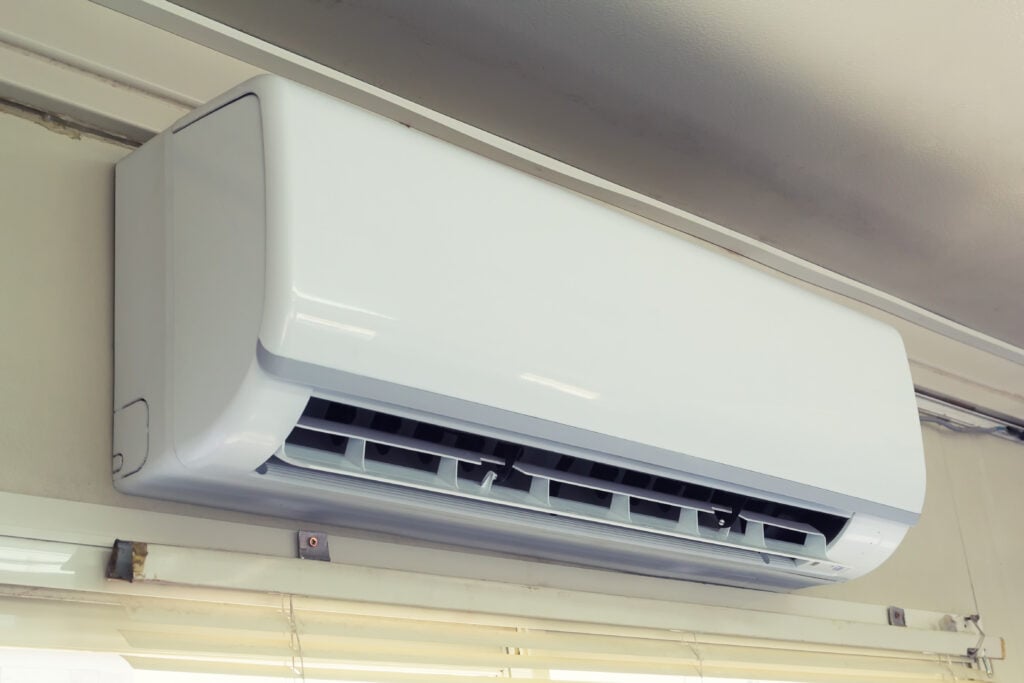
A ductless air conditioner, also called a mini split, uses the same refrigerant-based cooling cycle as a central air conditioner but delivers conditioned air directly into the room rather than through a network of ducts. The system has two main components connected by a narrow refrigerant line that passes through a small hole in an exterior wall: an outdoor compressor unit and one or more indoor air handlers that mount on the wall, ceiling, or floor of the space being conditioned.
When cooling is called for, the outdoor unit compresses refrigerant and sends it to the indoor air handler, which releases the cooled air directly into the room. The system reverses this process for heating in models that include a heat pump function, making them capable of both heating and cooling in a single compact installation. Most modern ductless systems also include inverter technology, which allows the compressor to adjust its speed continuously based on demand rather than cycling fully on and off. This keeps temperatures more consistent and reduces energy consumption compared to traditional single-stage systems.
According to ENERGY STAR, ductless systems eliminate energy loss from ductwork, which can account for more than 30% of a home’s energy use for space conditioning. For homes where ductwork is absent, leaky, or poorly insulated, that efficiency advantage alone can justify the investment.
Types of Ductless Air Conditioners
Ductless systems come in several configurations. Understanding the differences helps you identify which type is the right fit for your home’s layout and comfort goals. Each configuration has its own set of ideal applications, and a licensed HVAC technician can assess your space and recommend the most appropriate option before any purchase is made.
Single-Zone Mini Split
A single-zone system connects one outdoor unit to one indoor air handler and is designed to condition a single room or defined space. This is the most common configuration for homeowners adding cooling to a home office, bedroom, sunroom, garage conversion, or finished basement. Single-zone systems are the least expensive to install and offer a straightforward solution when the goal is comfort in one specific area.
Multi-Zone Mini Split
A multi-zone system connects one outdoor unit to multiple indoor air handlers, each serving a different room or zone. This allows independent temperature control in each space, so one room can be kept cool while another stays warmer or is turned off entirely. Multi-zone systems are well suited for homes without ductwork that need whole-home cooling, or for homes with existing central air that have specific problem areas where the central system consistently underperforms.
Ceiling Cassette
A ceiling cassette mounts flush with the ceiling rather than on the wall, making it a popular choice for spaces where wall-mounted units are impractical or aesthetically undesirable. Ceiling cassettes distribute air in four directions simultaneously, which provides more even coverage in open-plan rooms, commercial spaces, or larger areas where a wall unit’s directional airflow would leave portions of the room unconditioned.
Floor-Mounted Air Handler
Floor-mounted indoor units are installed near the floor rather than near the ceiling and are suitable for rooms with sloped ceilings, large windows that limit wall space, or situations where the occupant prefers lower air delivery. These units are also a strong option for heating applications because warm air delivered near the floor rises naturally through the space.
8 Benefits of a Ductless Air Conditioner

Ductless systems offer a distinct set of advantages over both window units and central air conditioning. Here is a breakdown of the benefits homeowners in Tewksbury, MA and the surrounding region consistently experience after making the switch.
- No Ductwork Required: Installation requires only a small hole in an exterior wall for the refrigerant line, power cable, and condensate drain. There is no need to design, install, or modify duct systems, which makes ductless an ideal solution for older homes, historic properties, additions, and any space where running ductwork would be costly or structurally impractical.
- Zone-by-Zone Temperature Control: Each indoor air handler operates independently, allowing different rooms to be maintained at different temperatures simultaneously. This eliminates the common frustration of a central system that cools some rooms too aggressively while leaving others uncomfortably warm.
- Higher Energy Efficiency: By delivering conditioned air directly into the space without traveling through ductwork, ductless systems avoid the thermal losses that reduce central system efficiency. Top-tier ductless models reach SEER2 ratings that significantly exceed what most central systems achieve, translating directly to lower monthly energy bills.
- Quiet Operation: Ductless indoor air handlers operate very quietly, typically between 19 and 30 decibels, which is comparable to a whisper. The loudest components, the compressor and condenser fan, are located in the outdoor unit. This makes ductless systems an excellent choice for bedrooms, home offices, and spaces where noise is a concern.
- Improved Indoor Air Quality: Ductless systems include multi-stage filtration that captures dust, allergens, bacteria, and other particles directly at the air handler. Because there is no ductwork to accumulate debris over time, the air quality benefits are consistent from the first day of operation.
- Heating and Cooling in One System: Most ductless mini splits include heat pump functionality, allowing the same system to provide both cooling in summer and heating in shoulder seasons. Modern cold-climate heat pumps operate effectively at outdoor temperatures well below zero, making them a practical heating supplement or primary heat source for many Massachusetts homes.
- Flexible Installation Options: Indoor air handlers can be mounted on walls, ceilings, or floors depending on room layout and aesthetic preferences. Multiple indoor units can be connected to a single outdoor unit, and the system can be expanded over time by adding indoor handlers as needs change.
- Eligible for Incentives: Qualifying ductless mini split heat pump systems are eligible for Mass Save rebates and may qualify for federal incentive programs. New Era is a Mass Save Heat Pump Installer, which means our customers have direct access to current rebate programs when they install qualifying equipment.
Is a Ductless Air Conditioner Right for Your Home?
Ductless systems are a strong fit in a wide range of situations, but they are not the universal answer for every home comfort challenge. Here is a straightforward look at when ductless makes sense and when another approach may serve you better.
Ductless is likely the right choice when:
- Your home has no existing ductwork: Older Massachusetts homes heated with baseboards, radiators, or steam heat have no duct infrastructure. Adding central air means either installing a full duct system or going ductless. For most of these homes, ductless is the more cost-effective and less disruptive path.
- You have a room your central system cannot reach: Finished basements, attic conversions, sunrooms, and additions frequently fall outside the reach of existing ductwork or receive inadequate airflow from the central system. A single-zone mini split solves the problem without modifying the main system.
- You want independent zone control: Households where different occupants prefer different temperatures, or where some rooms are used infrequently, benefit from the zone-by-zone control that ductless provides.
- You are adding a detached structure: Garages, workshops, home studios, and accessory dwelling units are ideal candidates for ductless installation since extending ductwork from the main home is rarely practical.
Ductless may not be the best fit when:
- You already have well-functioning central air: If your home has modern, well-maintained ductwork and a properly sized central system, the incremental benefit of switching to ductless may not justify the cost.
- You need whole-home comfort on a limited budget: Multi-zone ductless systems that serve an entire home can cost more than a central system replacement if the ductwork is already in good condition.
Common FAQs About Ductless Air Conditioners
Homeowners considering ductless for the first time tend to ask the same questions. Here are clear, direct answers to the most common ones.
How much does a ductless mini split cost to install?
Installed costs for a single-zone system typically range from $2,500 to $5,000 depending on the unit’s capacity, efficiency rating, and installation complexity. Multi-zone systems range from $5,000 to $12,000 or more depending on the number of indoor units and the scope of the installation. Mass Save rebates can reduce the net cost significantly for qualifying heat pump systems.
Do ductless systems work in cold Massachusetts winters?
Modern cold-climate heat pump mini splits are designed to operate at full or near-full heating capacity at outdoor temperatures as low as minus 13 degrees Fahrenheit, making them well-suited for New England winters. This capability has improved dramatically over the past decade and is a major reason ductless heat pumps have become a viable primary heating option across Massachusetts.
How long does a ductless system last?
Most ductless mini splits have an expected lifespan of 15 to 20 years with proper maintenance. Annual cleaning of the indoor air handler filters and periodic professional servicing of the refrigerant system keep the equipment operating at peak efficiency throughout its life.
How visible are the indoor units?
Wall-mounted indoor air handlers are compact, typically around 30 to 36 inches wide and 10 to 12 inches tall, and mount high on the wall. They are noticeably present in the room but most homeowners find them far less obtrusive than a window unit and comparable in presence to a mounted flat-screen television. Ceiling cassette and concealed-duct options are available for homeowners who prefer a more discreet installation.
Can I control a ductless system with my phone?
Most current ductless mini split models include Wi-Fi connectivity and compatibility with smartphone apps that allow remote control, scheduling, and energy monitoring. Some models also integrate with smart home platforms. This feature adds convenience and can contribute to additional energy savings through more disciplined scheduling.
New Era Plumbing & HVAC: Ductless Done Right
Ductless mini splits are one of the most versatile comfort solutions available to New England homeowners, and a properly designed and installed system delivers on every one of the benefits above. At New Era Plumbing & HVAC, we are Mass Save certified Heat Pump Installers with the training and experience to size, configure, and install ductless systems correctly for each home we work in. We walk you through your options honestly, help you understand current rebate eligibility, and back every installation with strong warranties and upfront pricing.
Contact our team today to schedule your ductless assessment and find out which system is the right fit for your home.